
When buyers search for 3003 3004 3105 3A21 mill finish polished aluminum coil, they are often comparing products that look similar at first glance but behave differently in fabrication, finishing, and end use. A practical way to understand these alloys is not just by chemistry or strength, but by the balance they create between surface appearance, formability, corrosion resistance, and structural stability. From that perspective, the 3xxx series becomes much easier to select.
These aluminum coils are manganese-based alloys, with some grades also containing magnesium. They are widely used where customers need a material that is lighter than steel, easier to shape, and more corrosion resistant in humid or outdoor environments. In coil form, they are especially valuable for continuous processing, roll forming, deep drawing, stamping, cladding, and decorative finishing.
A distinctive way to look at these alloys
The real difference between 3003, 3004, 3105, and 3A21 is not simply which one is "better." It is about what each alloy is trying to do.
3003 aluminum coil is often seen as the most balanced and universal option. It offers very good corrosion resistance, reliable workability, and stable performance in general fabrication. If a project needs a coil that can be bent, stamped, or formed without too much difficulty, 3003 is often the first choice.
3004 aluminum coil adds more strength, mainly because of its magnesium content. It is well suited for applications where the material must maintain shape better after forming, such as roofing panels, container bodies, and certain architectural components. It gives a useful step up from 3003 when customers want better mechanical performance without losing too much workability.
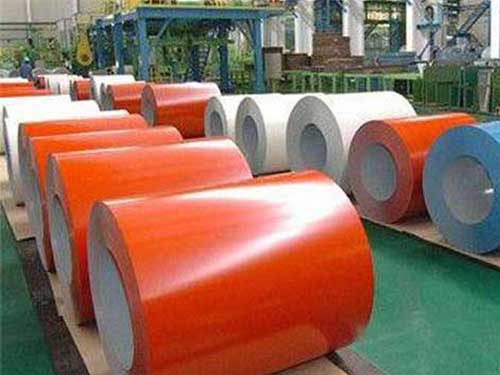
3105 aluminum coil is frequently selected for building and decorative markets. It has good corrosion resistance and moderate strength, but one of its biggest advantages is its suitability for coated, painted, and formed products. It is widely used for roofing, siding, shutters, and signage substrates because it performs well in exterior exposure and offers a clean finished surface.
3A21 aluminum coil is a less commonly discussed grade internationally, but it remains important in many industrial and transport-related applications. It belongs to the Al-Mn family and is appreciated for stable corrosion resistance, weldability, and formability. In many cases, it can be considered alongside 3003 for similar processing environments, depending on the required standard and regional supply chain preferences.
Mill finish and polished finish: the surface tells part of the story
In the coil market, the phrase mill finish polished aluminum coil can cause confusion, because mill finish and polished finish are not exactly the same surface condition.
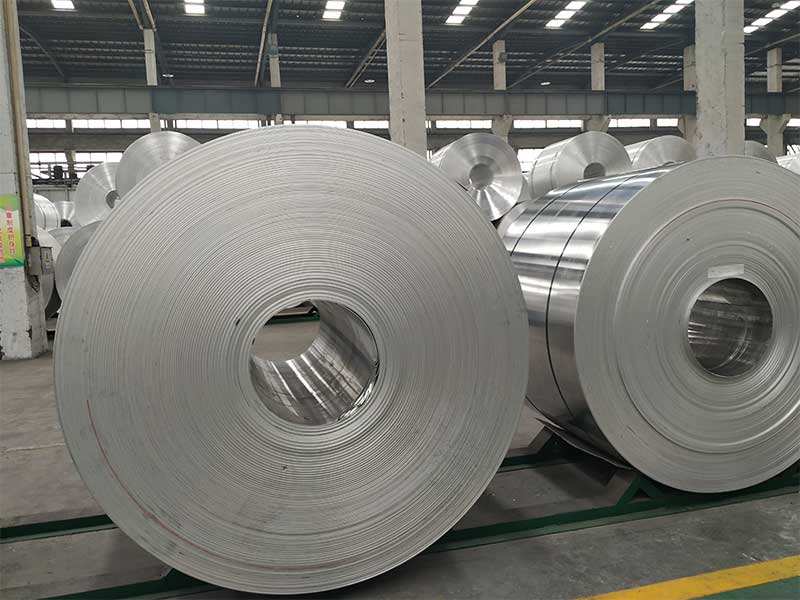
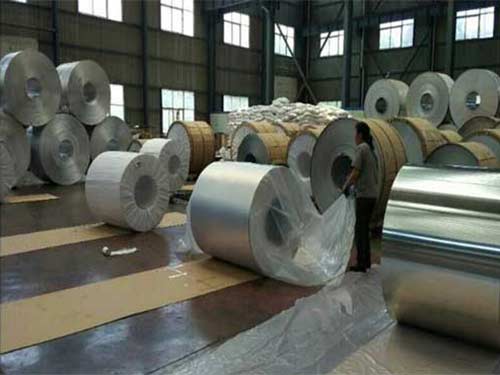
A mill finish coil is the natural surface produced after rolling and annealing, without added decorative treatment. It keeps the industrial character of aluminum, with a smooth but not mirror-like appearance. This finish is common for customers who will later paint, laminate, emboss, anodize, or fabricate the coil.
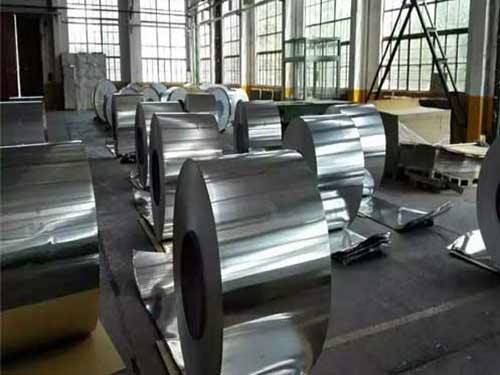
A polished aluminum coil goes a step further. Through mechanical polishing, brushing, or other surface treatment, the coil gains a brighter, more reflective, and more decorative appearance. This is useful for ceiling systems, appliance panels, interior trim, lighting reflectors, and architectural details. For polished products, alloy consistency and surface cleanliness become more important, since even small rolling marks may become visible after finishing.
From a buyer's perspective, selecting the alloy and selecting the surface should happen together. A good-looking polished coil is not only about shine. It also depends on the alloy's response to forming, the uniformity of the rolled surface, and the stability of the temper.
Common parameters for 3003 3004 3105 3A21 aluminum coil
These coils can be supplied in a wide range of sizes according to customer requirements and processing lines.
Typical parameters include:
- Thickness: 0.2 mm to 6.0 mm
- Width: 20 mm to 2650 mm
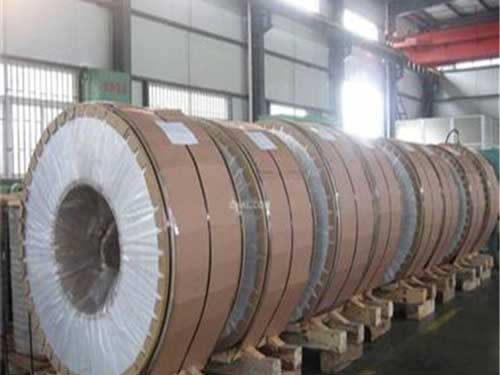
- Inner diameter: 150 mm, 300 mm, 405 mm, 505 mm
- Outer diameter: customized according to coil weight and transport limits
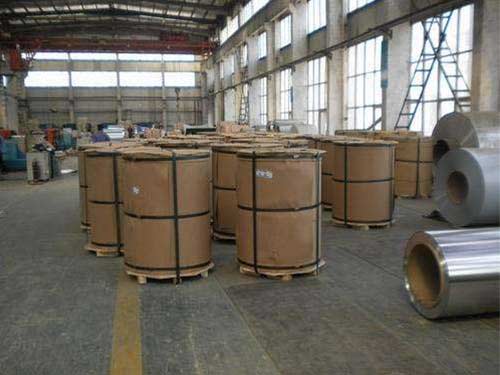
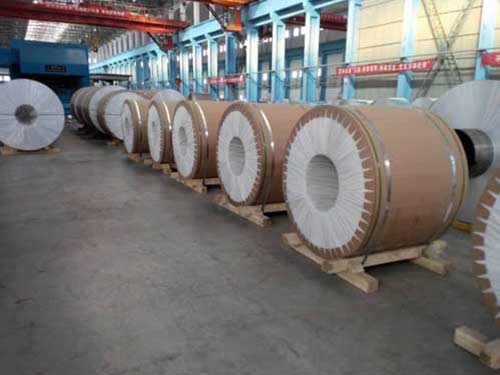
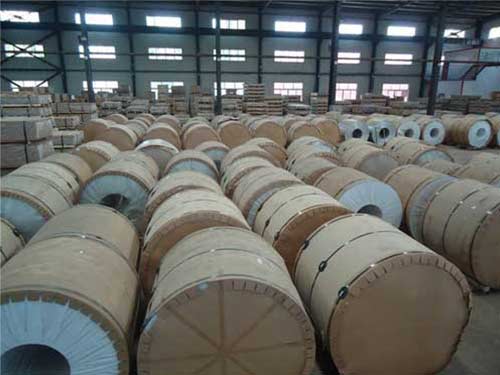
- Coil weight: usually 1 ton to 8 tons, or as required
- Surface: mill finish, polished, bright, brushed, embossed, coated
- Flatness and edge condition: slit edge or mill edge available
Thickness tolerance, width tolerance, camber, and surface quality are generally controlled according to applicable international or customer-specified standards.
Alloy tempers and processing conditions
The temper affects how the coil performs in bending, stamping, roll forming, and final installation. Common tempers for these alloys include:
- O temper: fully annealed, soft, excellent formability
- H14: strain hardened to half hard condition
- H16: strain hardened to three-quarter hard condition
- H18: full hard
- H24: strain hardened and partially annealed
- H26: higher strength with partial annealing
For applications involving deep drawing or complex forming, O temper or H24 is often preferred. For roofing, panels, and general building products, H14, H16, or H24 are common because they offer a better balance of shape retention and workability. For polished decorative use, customers often choose a temper that can maintain surface quality during fabrication without excessive springback or surface distortion.
Implementation standards
These aluminum coils are commonly produced according to major international standards, including:
- ASTM B209
- EN 485
- EN 573
- GB/T 3880
- JIS H4000
Actual supply can be customized to meet project drawings, end-use requirements, or processing specifications. For export business, it is also common to provide inspection documents covering chemistry, mechanical properties, dimensions, and surface quality.
Chemical composition table
Below is a simplified reference table for the main chemical elements of these alloys. Exact values may vary slightly depending on the governing standard.
| Alloy | Si % | Fe % | Cu % | Mn % | Mg % | Zn % | Others % | Al % |
|---|---|---|---|---|---|---|---|---|
| 3003 | 0.60 max | 0.70 max | 0.05–0.20 | 1.0–1.5 | - | 0.10 max | 0.15 max each | Remainder |
| 3004 | 0.30 max | 0.70 max | 0.25 max | 1.0–1.5 | 0.8–1.3 | 0.25 max | 0.15 max each | Remainder |
| 3105 | 0.60 max | 0.70 max | 0.30 max | 0.30–0.80 | 0.20–0.80 | 0.40 max | 0.15 max each | Remainder |
| 3A21 | 0.60 max | 0.70 max | 0.20 max | 1.0–1.6 | 0.05 max | 0.10 max | 0.15 max each | Remainder |
The presence of manganese is what gives these alloys their characteristic corrosion resistance and moderate strength. In 3004 and 3105, magnesium further supports strength improvement. This is why 3004 often feels more structurally capable, while 3003 remains easier and more forgiving in many forming operations.
Typical applications
These coils are widely used in areas where both function and appearance matter. Common uses include roofing sheets, wall cladding, insulation jacketing, rainwater systems, ceilings, shutters, blinds, signage, appliance panels, transportation interiors, decorative trim, and general fabrication parts.
For mill finish supply, customers often use the coil as a substrate for later processing. For polished supply, the product may go directly into visible applications where reflectivity and surface consistency matter more.
How customers usually choose
A quick way to choose is to think in terms of application behavior.
If you need a general-purpose alloy with dependable forming performance, 3003 is often the safest option.
If you need more strength for panels or formed structural skins, 3004 is a strong candidate.
If the project is architectural, painted, or outdoor decorative, 3105 is frequently ideal.
If the specification follows regional industrial standards and calls for a stable Al-Mn alloy with good corrosion resistance, 3A21 is worth serious attention.
In other words, these four alloys are not competing for one single job. They are different answers to different production realities.
Final thoughts
The value of 3003 3004 3105 3A21 mill finish polished aluminum coil lies in its flexibility. The same product family can serve industrial fabrication, decorative processing, and architectural manufacturing, simply by adjusting alloy, temper, surface, and dimensions. For fast purchasing decisions, the smartest approach is to compare not only price per ton, but also finishing route, forming method, service environment, and required appearance.
When those factors are matched correctly, the coil stops being just a raw material. It becomes a reliable surface, a workable structure, and a more efficient manufacturing choice.