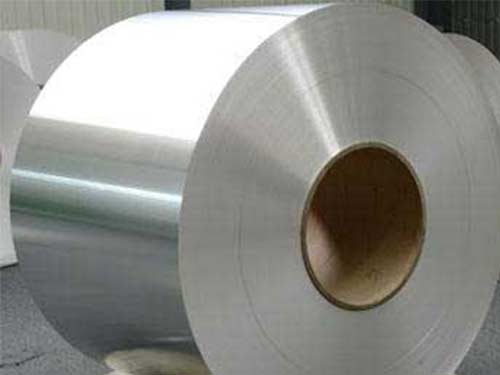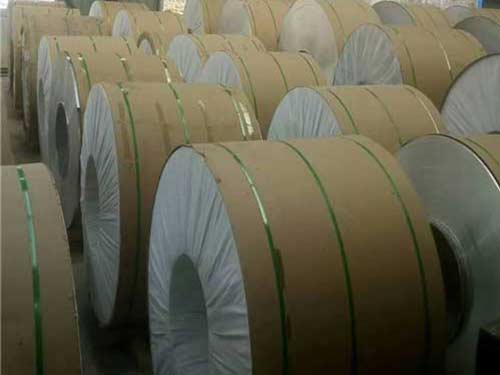

5182 H19 aluminum coil is a high-strength Al-Mg alloy coil engineered for can-making lines that demand fast forming, stable surface quality, and consistent performance at high speeds. As a tin can material (commonly used as an aluminum can-end or related packaging component stock depending on design), 5182 in the H19 temper is valued for its elevated work-hardened strength, good corrosion resistance in food-contact environments, and reliable conversion behavior during stamping, scoring, and seaming operations.
This product is typically supplied as precision-rolled coil with tight gauge control, clean surfaces, and stable mechanical properties-supporting predictable tool life and low scrap rates in continuous production.
Features of 5182 H19 Aluminum Coil
| Feature | Customer Value in Can-Making |
|---|---|
| High strength in H19 temper | Helps maintain panel rigidity and buckle resistance during forming and handling |
| Good corrosion resistance (Al-Mg system) | Performs well in humid storage and food/beverage packaging environments |
| Excellent coil consistency | Supports stable press settings and reduced downtime on high-speed lines |
| Clean, defect-controlled surface | Promotes uniform coating/printing and reduces leak-risk from surface defects |
| Good response to conversion processes | Reliable stamping and tab/end forming when process windows are set correctly |
| Food-contact suitability (with proper coating system) | Widely used in packaging when paired with qualified lacquer/coatings |
Typical Applications
| Application Area | Typical Use |
|---|---|
| Can end stock | Ends, easy-open ends, tabs (depending on customer design and thickness range) |
| Packaging components | Closures, lids, pull rings, formed packaging parts |
| General high-strength thin-gauge parts | Where high work-hardened strength and good corrosion resistance are needed |
Note: "Tin can material" is often used as an industry phrase for packaging stock; final can structure may include coated aluminum components rather than tinplate. Selection should align with the customer's forming route, coating system, and end-use media.
5182 is an aluminum-magnesium alloy designed to balance strength and corrosion resistance. Magnesium is the primary strengthening element, contributing to strong work-hardening behavior, which is especially useful when the material is supplied in a hard temper such as H19. Compared with softer tempers, H19 offers higher yield and tensile strength, helping maintain shape stability in thin gauges and improving dent resistance of finished components.
Temper Description: H19 in Practice
| Item | Description |
|---|---|
| Temper | H19 |
| Meaning | Strain-hardened to a very high strength level (among the harder H tempers) |
| Practical effect | Higher strength, reduced ductility compared with softer tempers |
| Production focus | Tight rolling control, stable mechanical property distribution across coil length/width |
H19 is commonly chosen where the forming operation is well-controlled and benefits from added stiffness and strength. For designs requiring deeper draws or larger strain margins, customers sometimes evaluate Hx2/Hx4 tempers; however, for many end-stock and packaging components, H19 brings a favorable balance of rigidity and productivity.
Chemical Composition (Typical / Standard Range)
The following table reflects common compositional limits for AA 5182. Final compliance should be confirmed against the governing standard and mill test certificate.
| Element | Content (wt.%) |
|---|---|
| Mg | 4.0–5.0 |
| Mn | 0.20–0.50 |
| Fe | ≤ 0.35 |
| Si | ≤ 0.20 |
| Cu | ≤ 0.15 |
| Cr | ≤ 0.10 |
| Zn | ≤ 0.25 |
| Ti | ≤ 0.10 |
| Others (each) | ≤ 0.05 |
| Others (total) | ≤ 0.15 |
| Al | Balance |
Mechanical Properties (Typical Targets for H19)
Mechanical performance depends on gauge, processing route, and testing direction. The values below are typical reference ranges used in packaging supply discussions; your project may require a dedicated target window.
| Property | Typical Range |
|---|---|
| Tensile strength, Rm | 360–430 MPa |
| Yield strength, Rp0.2 | 320–390 MPa |
| Elongation, A50 | 2–6% |
| Hardness (indicative) | High work-hardened level |
Directional properties (L/ LT) can be relevant for scoring and tab forming. For critical end designs, it is common to align property windows with the customer's conversion tooling and failure mode (score cracking, tab fracture, rivet integrity).
Technical Specifications for Coil Supply
Typical supply parameters are summarized below; exact limits can be customized for can-stock programs.
| Parameter | Typical Offer Range / Notes |
|---|---|
| Product form | Aluminum coil |
| Alloy / temper | AA 5182 H19 |
| Thickness | 0.18–0.50 mm (customizable by end design) |
| Width | 600–1600 mm (slit-to-width available) |
| Coil ID | 405 mm / 508 mm (per customer standard) |
| Coil OD | Up to ~1400–2000 mm (depends on thickness and weight limits) |
| Coil weight | Commonly 3–10 tons (logistics dependent) |
| Edge | Slit edge / mill edge (as agreed) |
| Surface | Bright / matte, controlled roughness for coating adhesion (as agreed) |
| Flatness | Controlled for high-speed feeding; suited for fin/leveling requirements |
| Oiling | Dry or lubricated (DOS control available per process needs) |
| Packing | Eye-to-wall / eye-to-sky, moisture barrier + corner/edge protection |
Surface Quality and Can-Making Performance Notes
| Performance Factor | What We Control | Why It Matters |
|---|---|---|
| Pinholes, inclusions, scratches | Melt cleanliness, filtration, rolling cleanliness, inspection | Reduces coating defects and leak risks |
| Gauge consistency | AGC control, profile management | Stable scoring depth and forming geometry |
| Shape (I-unit, camber, waviness) | Tension leveling / process control | Smooth feeding and stacking, fewer press stops |
| Surface roughness | Texturing control | Supports lacquer/ink adhesion and consistent appearance |
| Residual stress | Rolling schedule optimization | Helps minimize coil set and shape-related defects |
For customers running high-speed conversion, coil-to-coil repeatability is often as important as single-coil peak performance. Stable properties and shape reduce press tuning time and improve yield.
Corrosion Resistance and Coating Compatibility
5182 naturally offers good resistance to atmospheric and many aqueous environments due to the protective aluminum oxide film, with Mg additions providing robust performance in packaging exposure conditions. For food and beverage contact, the system performance is typically defined by the lacquer/coating selection, curing process, and integrity after forming.
| Item | Typical Expectation |
|---|---|
| Base alloy corrosion behavior | Good general corrosion resistance |
| Galvanic considerations | Avoid direct contact with dissimilar metals in wet conditions unless insulated |
| Coating/printing | Compatible with common can-coating systems when surface is prepared to spec |
| Hygiene | Supplied with controlled oiling/cleanliness as required by customer line |
Quality Documents and Inspection Items
| Document / Check | What Customers Typically Receive |
|---|---|
| Mill Test Certificate (MTC) | Chemistry, mechanical properties, and traceability |
| Dimensional report | Thickness/width/coil parameters (as agreed) |
| Surface inspection | Visual + process inspection for defects |
| Packaging compliance | Packing photos, labeling, moisture protection details (optional) |
Ordering Guidance (What to Specify)
| Item to Confirm | Recommendation |
|---|---|
| End-use and forming route | Share drawing/process (score depth, rivet, tab forming) for property targeting |
| Thickness and tolerance | Align with press/tooling capability and stiffness requirement |
| Surface roughness and finish | Match coating/printing system and appearance targets |
| Oiling type and amount | Optimize for conversion lubrication and cleanliness |
| Coil ID/OD, weight limits | Match decoiler and plant logistics |
| Inspection standard | Agree on defect limits and reporting method |
5182 H19 aluminum coil for tin can material delivers high work-hardened strength, stable coil quality, and excellent corrosion resistance for demanding packaging and can-making applications. With tight gauge control, clean surface quality, and reliable mechanical properties, AA 5182 H19 supports efficient stamping, scoring, and forming on high-speed lines. Available in customizable coil sizes and packaging options, it is an ideal choice for manufacturers seeking consistent performance and productivity in can-stock supply.