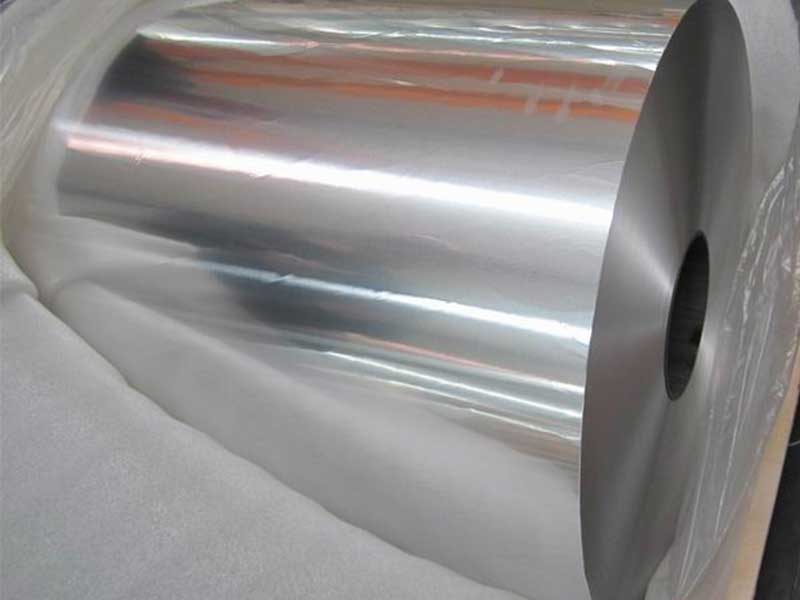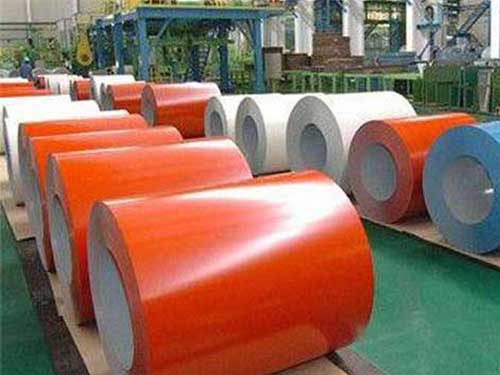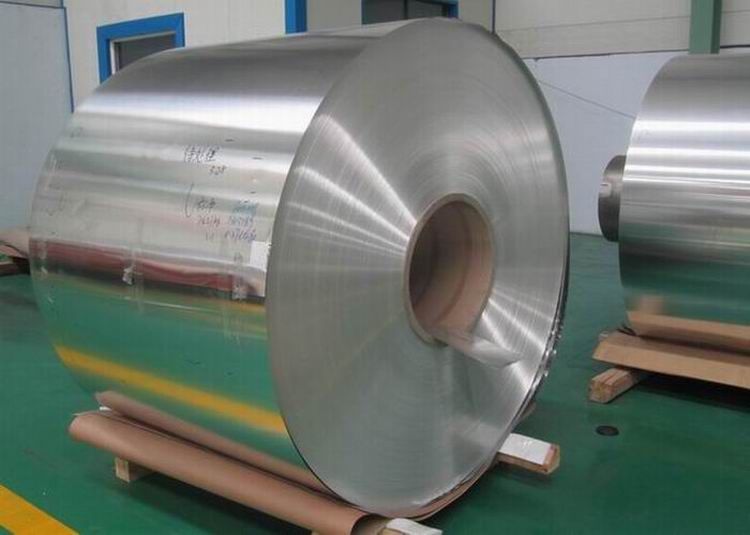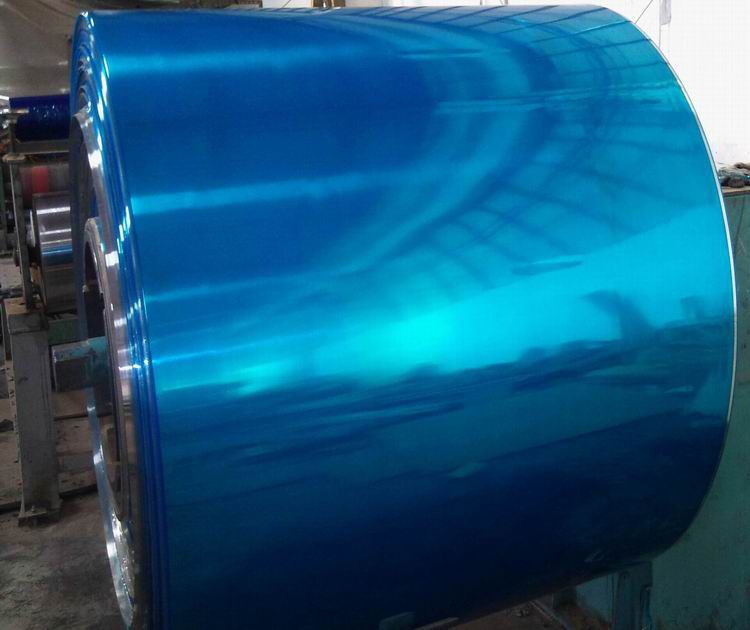

0.5mm Roll Aluminum Coil 1100: The "Quiet Performer" Behind Clean Finishes and Reliable Forming
When customers ask for a 0.5mm roll aluminum coil 1100, they're often not chasing something flashy. They're looking for a material that behaves predictably: it bends without protest, takes a clean surface finish, resists everyday corrosion, and runs smoothly through stamping, roll forming, insulation jacketing, or panel production. From a practical manufacturing viewpoint, 1100 aluminum at 0.5mm thickness is less like a "specialty alloy" and more like a dependable baseline-one that many industries quietly build around.
Alloy 1100 belongs to the commercially pure aluminum family. That purity is exactly why it's valued: it offers excellent workability and strong corrosion resistance, especially in general atmospheric conditions. At 0.5mm, it becomes a sweet spot for light-gauge applications where weight, forming ease, and surface appearance matter more than structural strength.
What "1100" Really Means at 0.5mm Thickness
1100 aluminum is typically defined as 99.0% minimum aluminum content. This high purity gives it:
- Very good ductility for tight-radius forming
- High thermal and electrical conductivity
- Strong resistance to many common corrosion environments
- Consistent, smooth surface for coating, laminating, or decorative finishing
At 0.5mm, those traits become especially visible on the shop floor. The coil feeds easily, responds well to forming tools, and is less likely to crack in routine fabrication compared with higher-strength alloys. The tradeoff is also clear: 1100 is not chosen for high-load structural parts. It's chosen when "easy and clean" is the real performance requirement.
Typical Applications Customers Choose 0.5mm 1100 Coil For
You'll see 0.5mm 1100 coil used where light gauge and a stable surface are essential:
- Insulation jacketing and cladding skins
- HVAC and ventilation components
- Lighting reflectors and decorative trim
- Appliance liners and cover panels
- General sheet metal fabrication where deep strength is not required
- Chemical processing covers and general corrosion-resistant skins (environment-dependent)
If your end product needs a "calm" metal that forms without surprises, 1100 at 0.5mm often outperforms stronger alloys simply by reducing scrap and improving throughput.
Parameters for 0.5mm Roll Aluminum Coil 1100
Because coils are purchased to run on equipment, buyers tend to care as much about consistency as they do about chemistry. Typical order parameters include:
- Alloy: Aluminum 1100
- Thickness: 0.50 mm (common tolerance depends on standard and agreement)
- Width: custom slit width or mill width
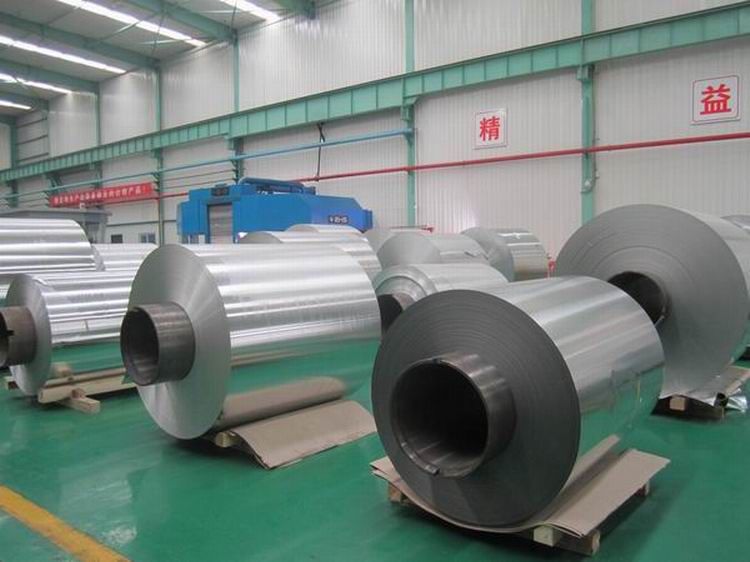
- Inner diameter: commonly 150 mm / 300 mm / 405 mm / 508 mm (per customer equipment)
- Outer diameter: determined by coil weight and packaging limits
- Coil weight: negotiated per logistics and line handling
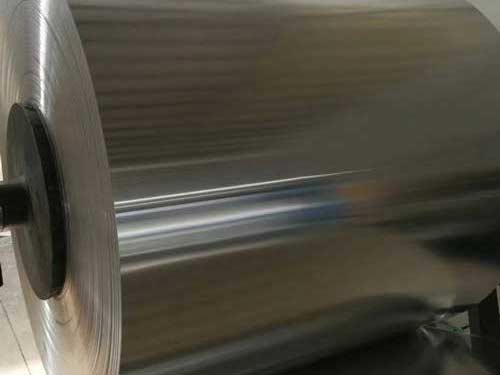
- Surface: mill finish, degreased, coated, or as-specified
- Edge: slit edge or mill edge, burr control as required
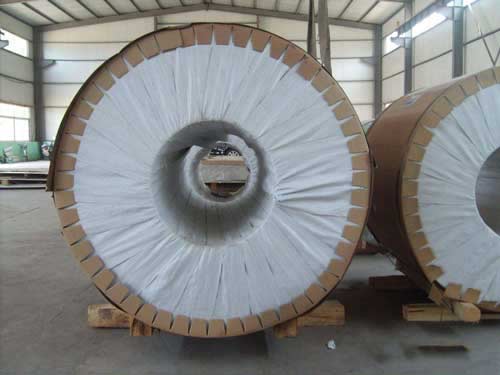
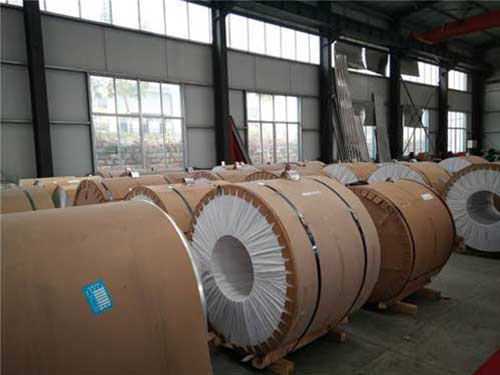
- Protective options: interleaf paper, PE film, anti-scratch packaging, moisture barrier
In real production, flatness, edge condition, and surface cleanliness often determine whether 0.5mm coil runs smoothly-especially for laminating, painting, or tight-tolerance forming.
Alloy Tempering: Choosing How "Soft" or "Stable" the Coil Should Be
Temper is where 1100 becomes tailored to your process. The same chemistry can behave very differently depending on temper:
O temper (Annealed)
The softest and most formable condition. Ideal for deep drawing, tight bending, or forming operations that push the metal hard. It can be more prone to surface marking if handling is rough.H14 / H24 (Strain hardened, partial anneal depending on designation)
A balance between strength and formability. Often chosen for general sheet metal work where the part needs to hold shape better than annealed material but still forms reliably.H18 (Full hard)
Higher strength, lower elongation. Useful where stiffness is important, but it's not the first choice if you need tight-radius forming.
For 0.5mm specifically, many buyers select O for demanding forming or H14/H24 for panels and skins that need better rigidity and dent resistance.
Implementation Standards and Common Supply Specifications
1100 aluminum coil is commonly produced and supplied under widely recognized standards. Depending on region and customer requirements, typical references include:
- ASTM B209: Aluminum and Aluminum-Alloy Sheet and Plate (often used for coil ordering language as well)
- EN 485 series: European standard for aluminum wrought products (sheet/strip)
- JIS H4000 / JIS H4160 (Japan, depending on form and product category)
- GB/T 3880 (China): Wrought aluminum and aluminum alloy sheets and strips
In procurement terms, standards help align expectations for mechanical properties, tolerances, and testing. For a 0.5mm coil used in visible applications, buyers often add extra requirements for surface quality, coating compatibility, and cleanliness beyond baseline standard clauses.
Chemical Composition (Typical) for Aluminum 1100
Below is a commonly referenced chemical composition range for AA 1100. Actual mill test certificates should be used for acceptance.
| Element | Typical Limit / Range (wt.%) |
|---|---|
| Al | ≥ 99.00 |
| Si | ≤ 0.95 (combined with Fe) |
| Fe | ≤ 0.95 (combined with Si) |
| Cu | 0.05–0.20 |
| Mn | ≤ 0.05 |
| Zn | ≤ 0.10 |
| Ti | ≤ 0.05 |
| Others (each) | ≤ 0.05 |
| Others (total) | ≤ 0.15 |
The "personality" of 1100 comes from that high aluminum base. Small amounts of copper can slightly influence strength and corrosion behavior, while iron and silicon are controlled as typical impurities.
Mechanical Behavior: What to Expect in Processing
Mechanical properties depend heavily on temper and exact production route, but the general processing behavior is consistent:
- Excellent bending performance in softer tempers, often allowing tighter radii with reduced cracking risk
- Good surface response for anodizing (note that high-purity alloys can show different anodized appearance than 5xxx/6xxx series)
- Strong conductivity for heat transfer skins and reflective applications
- Low strength compared to alloyed grades, meaning it dents easier if the design needs stiffness without backing support
If your product is a thin cover, liner, or wrap, 0.5mm 1100 can feel "just right." If your product must resist impact or carry load, you may need either a harder temper, a different alloy, or a design change such as ribs, backing, or thicker gauge.
A Buyer's Lens: Why This Coil Often Saves More Than It Costs
From a customer-value perspective, 0.5mm roll aluminum coil 1100 is frequently purchased not because it has the highest tensile numbers, but because it reduces friction in manufacturing:
- fewer forming issues
- stable coil-to-coil performance
- clean finishing options
- broad availability and straightforward certification
It's the kind of material that disappears into your process-in a good way-because it's easy to run, easy to finish, and easy to trust.