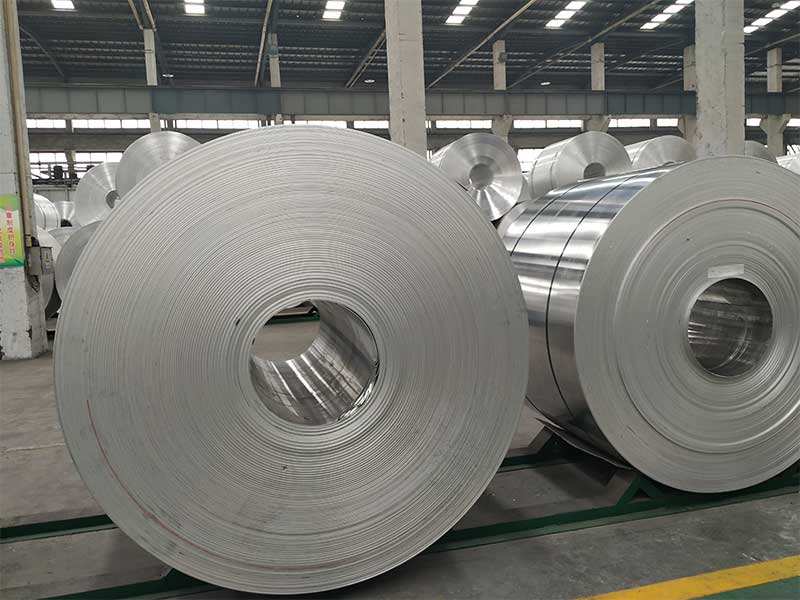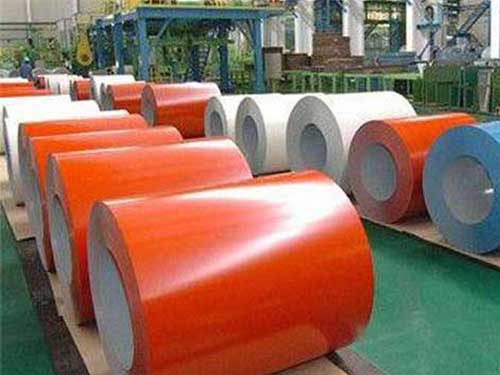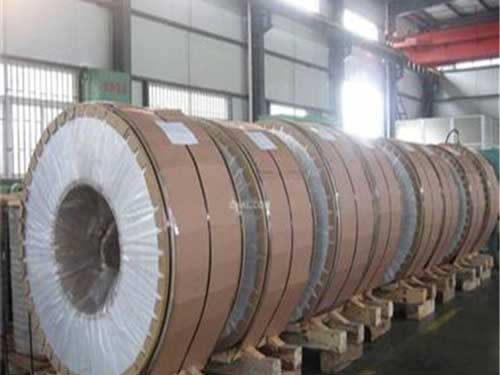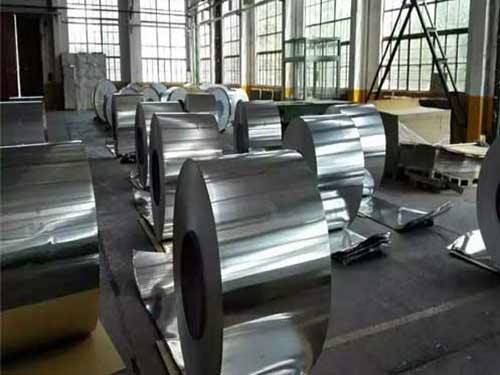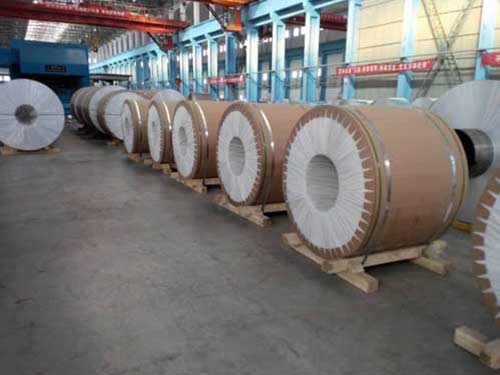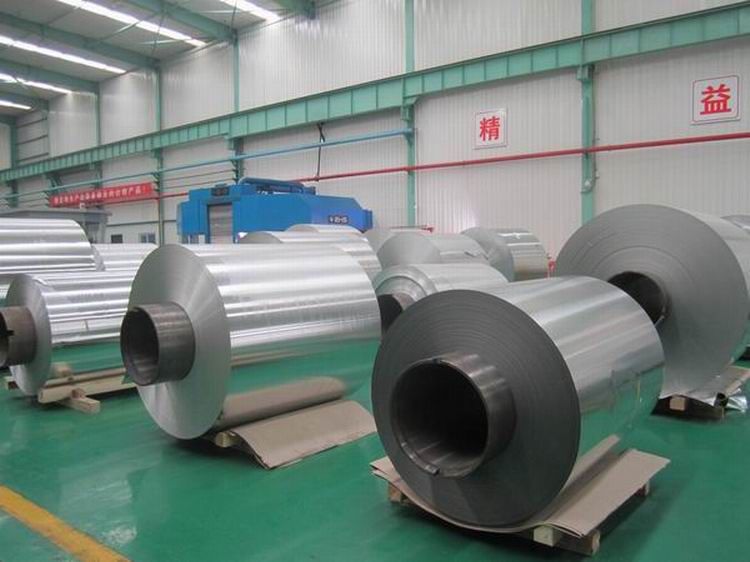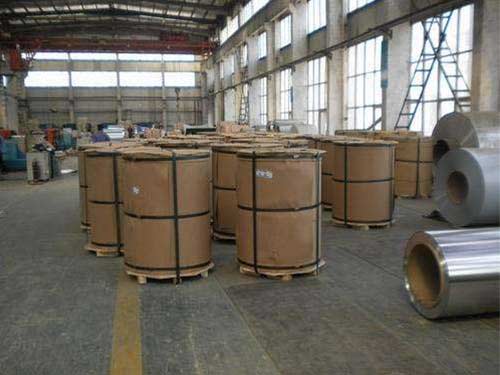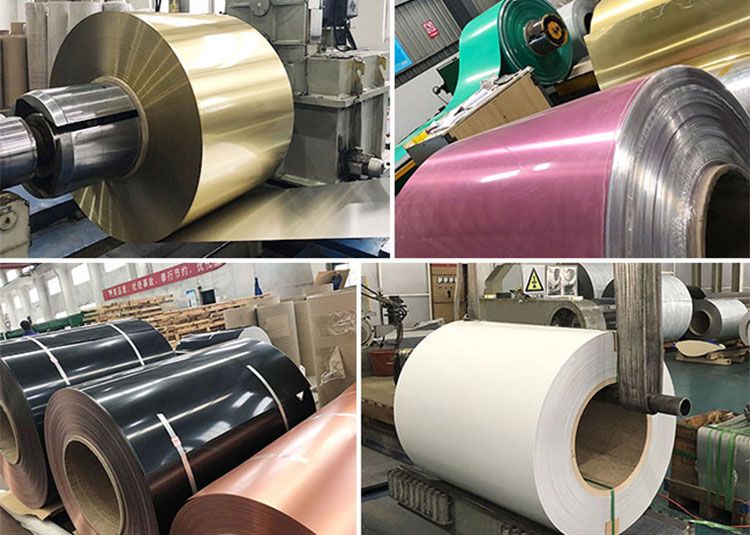
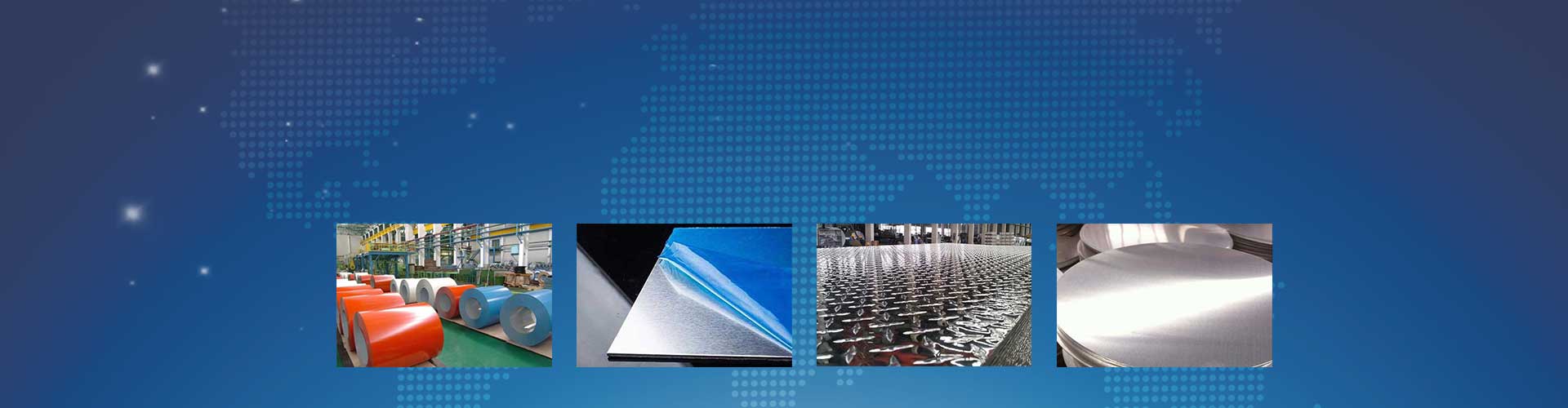
3003 aluminium coils are a workhorse product in the 3xxx series (Al–Mn alloys), valued for excellent formability, reliable corrosion resistance, and cost-effective performance. In coil form, 3003 is especially attractive for high-throughput fabrication-stamping, roll forming, bending, and deep drawing-where consistent mechanical behavior and surface quality directly affect yield and finished-part appearance.
What is 3003 Aluminium?
3003 is an aluminum alloy primarily strengthened by manganese (Mn). It is not heat-treatable; instead, strength is tailored by cold work and controlled through temper selection (e.g., O, H14, H16, H18). Compared with commercially pure aluminum (1xxx), 3003 offers higher strength while retaining excellent forming capability.
Positioning in the market:
- Better strength than 1050/1060, similar processing ease
- Better formability than many higher-strength alloys
- Excellent value for general fabrication and corrosion-exposed components
Features at a Glance
| Feature | What it means in practice | Customer value |
|---|---|---|
| High formability | Easy bending, spinning, drawing | Lower cracking risk, higher yield |
| Good corrosion resistance | Stable in many atmospheric and mild chemical environments | Longer service life, reduced maintenance |
| Non-heat-treatable stability | Predictable properties by temper | Process consistency across batches |
| Good thermal conductivity | Efficient heat transfer | Ideal for heat exchangers, HVAC fins |
| Attractive surface finish | Uniform coil surface for painting/anodizing (limited) | Better aesthetics, better coating results |
| Weldable & brazeable | Common joining processes work well | Flexible fabrication routes |
Chemical Composition (Typical Limits)
3003 is defined by standards such as ASTM B209 / EN 485 (requirements may vary slightly by region/standard). The table below reflects common composition limits.
| Element | Content (wt.%) |
|---|---|
| Al | Remainder |
| Mn | 1.0 – 1.5 |
| Cu | 0.05 – 0.20 |
| Fe | ≤ 0.70 |
| Si | ≤ 0.60 |
| Zn | ≤ 0.10 |
| Mg | ≤ 0.05 |
| Others (each) | ≤ 0.05 |
| Others (total) | ≤ 0.15 |
Why Mn matters: manganese increases strength through solid-solution strengthening and dispersoid effects, while largely preserving ductility-one reason 3003 is so friendly to forming operations.
Typical Mechanical Properties (By Temper)
Mechanical properties vary with gauge, processing route, and standards. The following ranges are typical for coil products.
| Temper | Tensile Strength (MPa) | Yield Strength (MPa) | Elongation (%) | Forming notes |
|---|---|---|---|---|
| O (Annealed) | 90 – 130 | 35 – 55 | 25 – 35 | Best deep draw/spinning |
| H12 (Quarter-hard) | 120 – 160 | 95 – 130 | 8 – 18 | Balanced formability/strength |
| H14 (Half-hard) | 140 – 180 | 115 – 150 | 5 – 12 | Common for panels & general forming |
| H16 (Three-quarter hard) | 160 – 200 | 135 – 170 | 3 – 8 | For stiffer parts, limited bending |
| H18 (Full hard) | 170 – 215 | 150 – 185 | 2 – 6 | Maximum stiffness, minimal forming |
Selection tip:
- Choose O temper for deep drawing, cookware, complex shapes.
- Choose H14 for general-purpose sheets/panels with moderate forming.
- Choose H18 when stiffness and flatness retention matter more than bend radius.
Coil Technical Specifications (Common Supply Range)
Actual availability depends on mill capability and customer specification. Typical commercial supply parameters are:
| Parameter | Typical Range / Option |
|---|---|
| Alloy | 3003 (also available: 3003A in some standards) |
| Temper | O, H12, H14, H16, H18 |
| Thickness | 0.20 – 6.00 mm |
| Width | 20 – 2000 mm |
| Coil ID | 150 / 300 / 405 / 508 mm (common options) |
| Coil OD | Up to ~1600 mm (equipment-dependent) |
| Surface finish | Mill finish, bright (process-dependent), one-side film, coated (prepainted route) |
| Edge | Slit edge / mill edge |
| Standards | ASTM B209, EN 485, JIS H4000 (as specified) |
Quality options often requested:
- Tight thickness/flatness control for roll forming
- Protected surface film for decorative panels
- Specific slitting tolerances for fin-stock or narrow strip stamping
Performance Characteristics (What Customers Feel on the Line)
| Performance Metric | 3003 Coil Behavior | Typical benefit |
|---|---|---|
| Bendability | Very good, especially in O/H12/H14 | Fewer edge cracks, clean bends |
| Deep draw performance | Strong in O temper | Stable cups/containers, low scrap |
| Corrosion resistance | Excellent in atmospheric exposure | Outdoor panels, housings, cladding |
| Thermal efficiency | High thermal conductivity (Al-based) | HVAC fins, heat transfer parts |
| Paint/coating adhesion | Generally good with proper pretreatment | Durable color-coated products |
| Anodizing appearance | Can be acceptable but not as uniform as 5xxx/6xxx | Use where appearance tolerances allow |
Typical Applications
1) Building & Construction
3003 aluminium coils are widely used for roofing trims, flashing, gutters, wall cladding substrates, decorative panels, and general sheet-metal work. Their corrosion resistance and forming ease enable fast on-site fabrication and long-term durability.
2) HVAC & Heat Transfer Components
3003 is a common choice for heat exchanger fins, evaporator components, and thermal shields, especially where good thermal transfer + formability are required.
3) Food, Kitchenware & General Containers
In O temper, 3003 is suitable for cookware bodies, lids, kitchen panels, and formed container parts, thanks to its deep draw performance and stable surface.
4) Transportation & Equipment Housings
Used for interior panels, housings, covers, ducting, and brackets that need corrosion resistance and moderate strength without heavy structural demands.
5) Insulation Jacketing & Cladding
Coiled 3003 sheet is common for pipe jacketing and insulation cladding in industrial environments, where forming and corrosion resistance are critical.
Benefits That Translate Into Lower Total Cost
| Benefit | How it reduces cost or risk |
|---|---|
| High process yield | Less cracking and fewer rejects in forming |
| Stable supply & common alloy | Competitive pricing and short lead times |
| Multiple temper options | Tailor strength without changing alloy |
| Corrosion resistance | Lower maintenance and replacement frequency |
| Excellent fabrication compatibility | Works with common cutting, bending, welding, and joining methods |
Practical Selection Guide (Quick Decision Table)
| Your priority | Recommended temper | Notes |
|---|---|---|
| Deep drawing / spinning | O | Maximum ductility and forming window |
| General sheet-metal forming | H12 / H14 | Best balance of strength and bendability |
| Stiff panels, less forming | H16 / H18 | Control bend radius and tooling to avoid cracking |
| Decorative coated panels | H14 (common) | Pair with proper pretreatment + coating system |
| Tight slitting for narrow strip | H14/H16 | Choose based on stamping vs. stiffness needs |
Processing & Handling Notes (Customer-Focused)
- Forming: Use appropriate bend radii for higher tempers (H16/H18). For tight bends, step down temper or increase radius.
- Joining: 3003 is generally weldable (e.g., TIG/MIG); selection of filler and parameters should match service conditions.
- Surface preparation: For painting or coating, consistent cleaning and pretreatment improve adhesion and corrosion performance.
- Storage: Keep coils dry and ventilated to prevent staining from moisture traps during transit or warehouse stacking.
3003 aluminium coils deliver a highly practical combination of formability, corrosion resistance, and cost efficiency. With multiple tempers available, customers can dial in the right balance of strength and workability-whether producing HVAC components at scale, forming architectural trims, or manufacturing general-purpose enclosures. For many non-structural applications, 3003 remains the dependable, production-friendly option that keeps both fabrication risk and overall project cost under control.