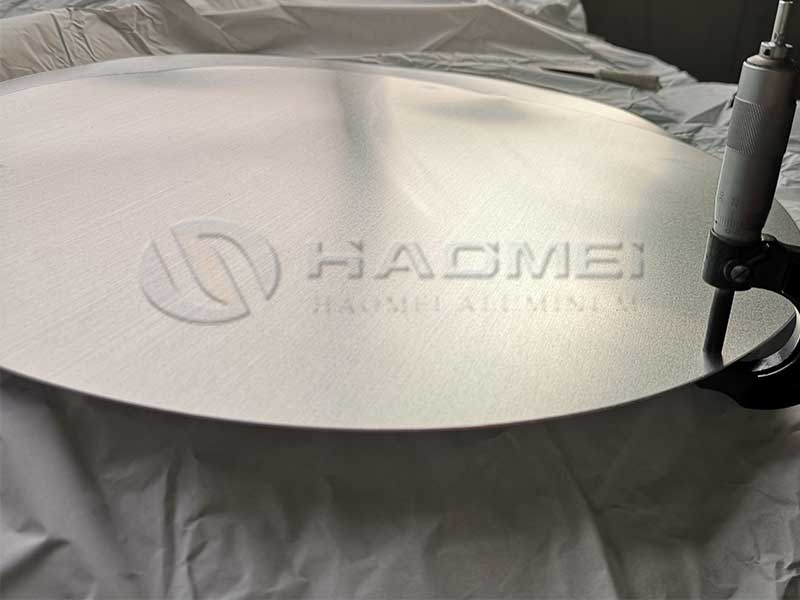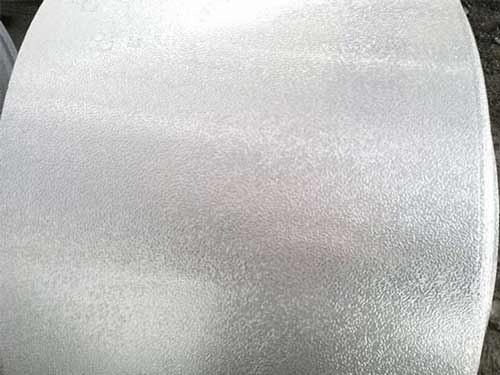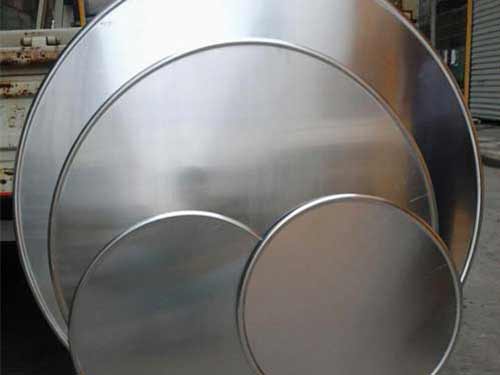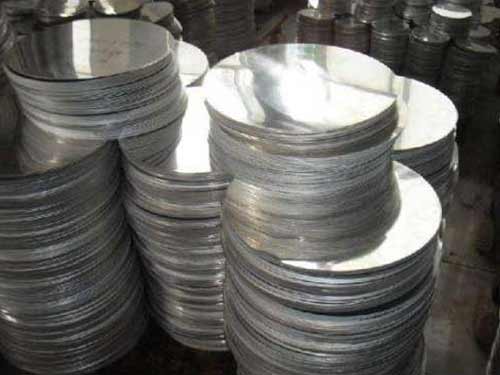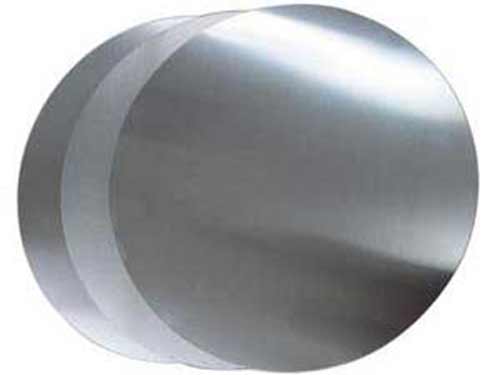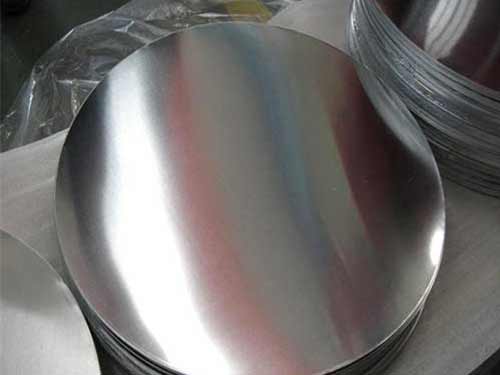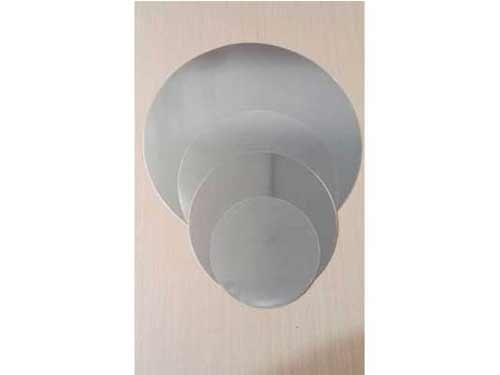

Aluminum circle 3003 has quietly become one of the “hidden heroes” inside modern electric cookers. You don’t see it from the outside, but it plays a decisive role in how fast your food heats, how evenly it cooks, and how long the appliance lasts. Looking at this material from the inside out reveals why so many cookware and appliance manufacturers consistently choose 3003 alloy over other options.
Instead of treating it as just another metal disk, think of the aluminum circle 3003 as the “thermal engine” of an electric cooker: it converts electrical energy from the heating element into stable, uniform heat across the pot bottom. That role demands very specific mechanical, thermal, and chemical characteristics.
Why 3003 Aluminum Circle Fits Electric Cookers So Well
3003 is an aluminum–manganese alloy, non-heat-treatable, strengthened mainly by cold working. The addition of manganese (around 1–1.5%) gives it higher strength than pure aluminum (like 1050/1060), while still keeping excellent formability and corrosion resistance.
For electric cooker applications, this combination matters in several ways:
- It resists deformation under repeated heating and cooling cycles. The bottom of an electric cooker sees frequent thermal expansion and contraction; 3003 holds its shape better than very soft pure aluminum.
- It spreads heat quickly and evenly across the cooking surface, reducing hot spots and helping maintain precise temperature control.
- It offers good corrosion resistance against water, steam, and typical kitchen environments, protecting the integrity of the inner pot and base.
In everyday use, that translates into steadier cooking results, less warping over time, and longer service life for the cooker base or inner pot.
Typical Chemical Composition of 3003 Aluminum Circle
A proper starts with the alloy chemistry. The table below reflects common ranges based on international standards (such as GB/T, ASTM, EN). Exact values may vary slightly by supplier, but high‑quality 3003 circles for electric cookers generally follow these limits:
| Element | Content (wt. %) |
|---|---|
| Aluminum (Al) | Balance |
| Manganese (Mn) | 1.0 – 1.5 |
| Copper (Cu) | 0.05 – 0.20 |
| Silicon (Si) | ≤ 0.6 |
| Iron (Fe) | ≤ 0.7 |
| Zinc (Zn) | ≤ 0.10 |
| Others (each) | ≤ 0.05 |
| Others (total) | ≤ 0.15 |
Manganese is the alloying element, boosting strength and improving resistance to fatigue and crack propagation. The small amount of copper slightly increases strength but is tightly controlled to avoid reducing corrosion resistance. The low levels of Si, Fe, and Zn help maintain good ductility and consistent behavior during deep drawing and spinning.
Mechanical Properties and Temper Choices
For electric cooker use, 3003 aluminum circle is commonly supplied in temper states like O, H14, H16, or H18. Each temper represents a different balance between softness (for forming) and hardness (for dimensional stability and strength).
Typical mechanical properties are:
3003-O (annealed)
- Tensile strength: about 95–130 MPa
- Yield strength: about 30–65 MPa
- Elongation: 20–35% or higher
3003-H14 (half-hard)
- Tensile strength: about 130–180 MPa
- Yield strength: about 60–145 MPa
- Elongation: 10–20%
3003-H16 / H18 (harder tempers)
- Higher strength, lower elongation, used where more rigidity is needed and forming is simpler
For inner pots or bases that require deep drawing and spinning into relatively complex shapes, O or H14 temper is often preferred. These tempers give manufacturers stable forming behavior and reduce the risk of cracking or wrinkling during production.
For flat heating plates or laminated bases, slightly harder tempers like H16 or H18 can be used to increase stiffness and improve resistance to warping under heat.
Parameters for Electric Cooker Applications
When specifying 3003 aluminum circles for electric cookers, several dimensional and surface parameters directly affect performance and production efficiency:
Thickness: commonly between 0.5 mm and 6.0 mm, depending on design
- Thinner gauges for lightweight inner pots
- Thicker plates for bases that must store heat or bond to stainless or non-stick layers
Diameter: often from 100 mm up to 1200 mm or more
- Small diameters for compact electric rice cookers or mini cookers
- Large diameters for commercial electric kettles or multi-function cookers
Thickness tolerance: tight control (for example ±0.01–0.05 mm) is critical
- Ensures uniform thermal response over the full surface
- Reduces variations in forming depth and pot volume during deep drawing
Surface quality: bright, clean, free of rolling marks, scratches, oil, and oxidation
- Important for subsequent anodizing, non-stick coating, or composite bonding
- Smooth, even surfaces also improve heat transfer and reduce localized stress points
Flatness and roundness: very important for integration with electric heating elements or induction plates
- Good flatness ensures intimate contact with the heating module, maximizing heat transfer efficiency
- Accurate roundness improves automatic feeding in stamping, spinning, and welding processes
Implementation Standards and Quality Control
Producers of electric cookers usually require 3003 aluminum circles that comply with recognized standards and internal quality criteria. Production is often aligned with:
- National or regional alloy standards, such as GB/T 3190 (China), ASTM B209 (USA), EN 573/485 (Europe)
- Dimensional and flatness requirements specified by the cooker manufacturer
- Food-contact suitability guidelines, especially when the circle becomes part of the inner pot or base in contact with water and steam
To meet these requirements, a structured process is followed:
- High-purity aluminum ingots and alloying elements melted and cast into slabs
- Hot rolling and cold rolling to achieve the target thickness with tight tolerances
- Intermediate annealing as needed to control temper and microstructure
- Precision circle blanking with minimized burrs and edge cracks
- Final annealing for O temper or controlled cold reduction for H temper states
- Surface cleaning and, where necessary, degreasing to prepare for downstream coating or bonding
Each step is tied to tests such as tensile test, hardness test, surface inspection, metallographic analysis, and chemical composition verification by spectrometer.
Thermal and Chemical Behavior in Real Use
In an electric cooker, the aluminum circle 3003 experiences repetitive heating cycles, direct contact with moist air, and sometimes exposure to food residues. Its chemical and thermal behavior is what protects the cooker’s long-term performance.
Thermal conductivity: typically around 160–190 W/m·K
- High enough to distribute heat quickly from the heating element to the food
- Helps eliminate temperature gradients across the pot bottom
Specific heat capacity: around 0.88–0.90 kJ/(kg·K)
- Aluminum heats up quickly and responds rapidly to power changes, which supports precise cooking programs
Melting point: about 643–657 °C for 3003 alloy (similar to pure aluminum)
- Working temperatures in cookers are far below this, ensuring a wide safety margin
Chemically, 3003 forms a thin, stable aluminum oxide layer when exposed to air. This passive film:
- Protects the underlying metal from further oxidation
- Improves resistance to neutral and slightly acidic environments, such as water, steam, and typical food ingredients
- Makes the alloy suitable for use as a substrate under anodized layers, ceramic coatings, or fluoropolymer non-stick finishes
Because of the controlled copper content and the stabilizing effect of manganese, 3003 maintains stronger corrosion resistance than many other work-hardening alloys with higher copper levels.
A Distinctive View: The Circle as a System Component
Instead of viewing the aluminum circle 3003 as a separate part, it is useful to consider it as a functional interface between three systems:
- The electrical system (heating element or induction coil)
- The mechanical structure (outer shell, base frame, and pot geometry)
- The food environment (water, rice, soup, oil, and steam)
In this interface position, material stability and consistency matter as much as individual properties. Tiny deviations in thickness or hardness across a batch can show up later as uneven cooking, noise from thermal deformation, or premature failure of coatings.
That is why leading electric cooker brands often specify not only the alloy and temper, but also:
- Grain size control for predictable forming and stable anodizing or coating
- Defined roughness levels to optimize bonding between aluminum and non-stick or stainless-steel cladding
- Controlled residual stress levels to minimize distortion during assembly and heating
When these details are handled correctly at the aluminum circle stage, the final cooker gains a smoother user experience: quieter operation, flatter pot bottoms, better temperature tracking, and more consistent cooking results.
Choosing 3003 Aluminum Circle for Your Electric Cooker Project
For manufacturers, the decision to use 3003 aluminum circles in electric cookers comes down to reliability and performance:
- Strong enough to resist deformation over thousands of heating cycles
- Ductile enough for deep drawing and spinning into complex pot shapes
- Thermally efficient for quick, even heating
- Chemically stable for long-term use in kitchen environments
By paying close attention to alloy composition, temper selection, dimensional parameters, and implementation standards, you transform a simple metal circle into a precisely engineered heat platform at the heart of every electric cooker.