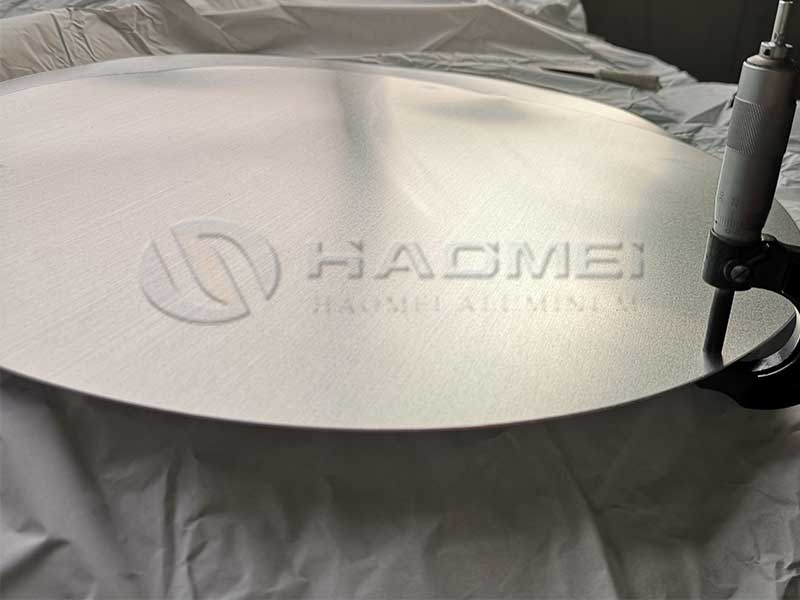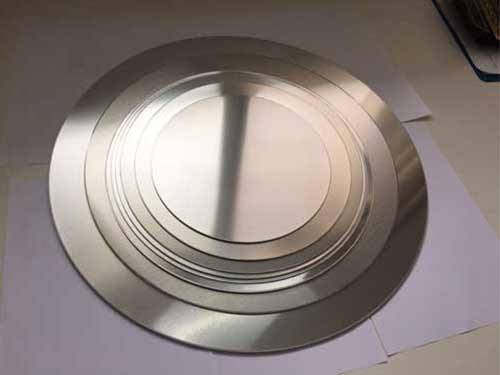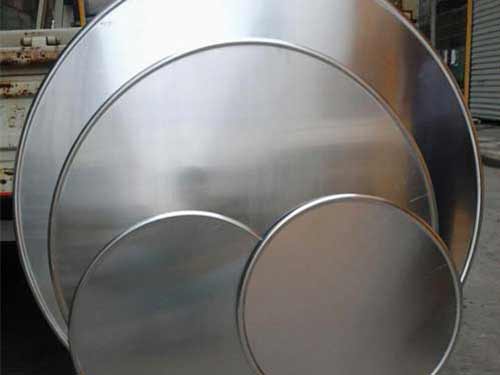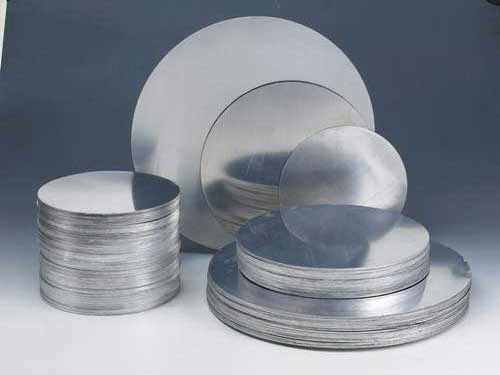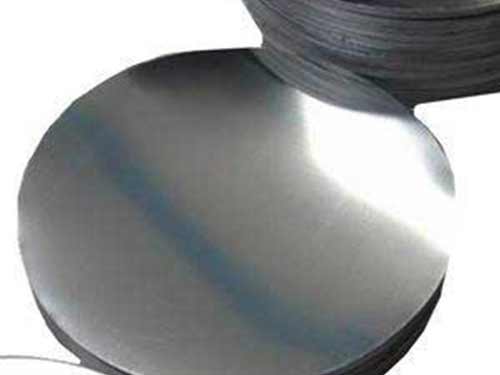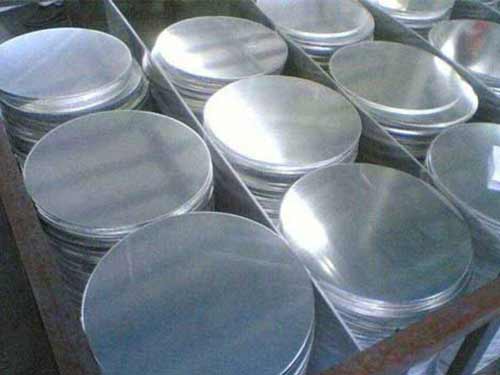

Aluminum discs and aluminum circles are the preferred substrates for modern traffic signs because they combine long outdoor life, low weight, excellent corrosion resistance, and strong compatibility with reflective films and digital printing systems. Whether the finished sign is a stop sign, speed limit plate, warning symbol, or directional marker, the performance of the aluminum blank largely determines how flat the sign remains, how well it resists weathering, and how reliably the reflective sheeting stays bonded over years of sun, rain, salt spray, and temperature cycling.
In manufacturing terms, aluminum disc and aluminum circle are often used interchangeably. Both refer to round aluminum blanks made by circle cutting or stamping from coil/sheet, then leveled, deburred, and surface-finished to meet traffic-industry requirements.
Why aluminum circles work so well for traffic signage
Traffic signs live outdoors full-time. The substrate must resist corrosion, remain dimensionally stable, and present a uniform surface for coating, sheeting lamination, or printing.
performance advantages
Corrosion resistance in harsh environments
Alloys from the 1xxx and 3xxx series naturally form a dense oxide layer. With proper pre-treatment, they perform strongly in humid coastal regions and winter de-icing salt exposure.Lightweight for safer installation
Compared with steel, aluminum reduces dead load on posts and gantries, improves handling efficiency, and lowers transportation costs.Excellent workability for forming and punching
Aluminum circles can be punched, riveted, edge-rolled, or slightly formed without cracking when the right temper is selected.High surface quality for reflective sheeting adhesion
Consistent roughness and cleanliness support stronger lamination and fewer bubbles, edge-lifts, or premature delamination.Long service life with low maintenance
Aluminum substrates remain stable under UV exposure and thermal cycling, supporting long warranties on reflective sheeting systems.
Typical alloys and tempers for traffic sign discs
Traffic-sign circles commonly use high-purity aluminum for maximum corrosion resistance and formability, or Al-Mn alloys for higher strength and better dent resistance. Selection depends on sign size, wind load, mounting style, and whether the sign will be flat, embossed, or edge-formed.
Common alloy choices (practical guidance)
AA1050 / AA1060 / AA1100 (1xxx series)
Very good corrosion resistance, excellent formability, ideal for general flat signs and laminated reflective film applications.AA3003 (3xxx series)
Higher strength and better resistance to handling dents; widely used for larger diameters and more demanding outdoor service.AA5052 (5xxx series, optional for premium)
Stronger again with very good corrosion resistance; used when higher rigidity is needed, though it may require tighter forming control depending on temper.
Chemical composition (reference ranges)
Actual composition can vary by standard and supplier practice. The table below summarizes typical reference limits used in aluminum signage production.
| Alloy | Al (min, %) | Mn (%) | Mg (%) | Si (%) | Fe (%) | Cu (%) | Notes |
|---|---|---|---|---|---|---|---|
| AA1050 | 99.50 | ≤0.05 | - | ≤0.25 | ≤0.40 | ≤0.05 | High purity, excellent corrosion resistance |
| AA1060 | 99.60 | ≤0.05 | - | ≤0.25 | ≤0.35 | ≤0.05 | Very common for sign blanks |
| AA1100 | 99.00 | ≤0.05 | - | ≤0.95 | ≤0.95 | 0.05–0.20 | Good workability, slightly higher impurities |
| AA3003 | Bal. | 1.0–1.5 | - | ≤0.60 | ≤0.70 | ≤0.05–0.20 | Stronger, good anti-dent performance |
| AA5052 | Bal. | ≤0.10 | 2.2–2.8 | ≤0.25 | ≤0.40 | ≤0.10 | Premium strength and corrosion resistance |
Technical specifications for traffic sign aluminum circles
The best traffic sign circles are not just "round metal." They are controlled for thickness consistency, flatness, edge condition, and surface cleanliness so downstream lamination and printing remain stable.
| Item | Typical range / option | What it impacts on the sign |
|---|---|---|
| Diameter | 100–1200 mm (custom possible) | Matches sign standards, reduces scrap |
| Thickness | 0.8–3.0 mm (common), custom available | Stiffness, wind load performance, weight |
| Temper | O, H12, H14, H16 (by alloy) | Formability vs rigidity balance |
| Surface finish | Mill finish, brushed, coated-ready | Reflective film adhesion, print quality |
| Flatness control | Leveled, low waviness | Prevents "oil canning," improves appearance |
| Edge quality | Deburred, smooth edge | Safer handling, better film edge sealing |
| Protective film | Optional PE film | Scratch prevention during transport/processing |
| Standard compliance | ASTM/EN/GB/JIS on request | Easier qualification with local sign specs |
Mechanical and physical properties (typical)
Properties depend on alloy, temper, and thickness. The values below are practical ranges used for engineering comparison when selecting blanks.
| Alloy / Temper (example) | Tensile strength (MPa) | Yield strength (MPa) | Elongation (%) | Density (g/cm³) | Notes |
|---|---|---|---|---|---|
| AA1060-O | 55–95 | 20–35 | 20–35 | 2.70 | Excellent forming, softer handling |
| AA1060-H14 | 95–130 | 75–110 | 4–10 | 2.70 | Better rigidity, less formability |
| AA3003-O | 90–130 | 35–55 | 20–30 | 2.73 | Balanced performance, good toughness |
| AA3003-H14 | 130–180 | 115–160 | 4–10 | 2.73 | Stronger, improved dent resistance |
| AA5052-H32 | 210–260 | 130–200 | 8–15 | 2.68 | High strength for demanding environments |
Features customers notice in real sign production
Stable lamination and printing
A clean, uniform surface reduces adhesive failure risks. For reflective sheeting, consistent substrate behavior supports uniform bond strength and fewer edge defects after weathering.
Consistent thickness and roundness
Controlled gauge supports repeatable punching, rivet setting, and automated sign assembly. Accurate diameter reduces trimming and avoids misalignment in frames.
Controlled residual stress
Good leveling and proper annealing help prevent warping after cutting, coating bake cycles, or outdoor thermal cycling.
Edge safety and finishing quality
Deburred edges reduce injury risk and help reflective film "wrap" cleanly at the perimeter, improving water resistance and appearance.
Applications in traffic and roadway systems
Aluminum discs and circles are used across a wide range of sign types and installation environments.
| Application | Typical circle requirements | Recommended alloy direction |
|---|---|---|
| Regulatory signs (speed limit, no entry) | Flatness, strong film adhesion, clean surface | AA1060/AA1100 for general use; AA3003 for larger sizes |
| Warning signs (construction, hazards) | Higher stiffness for outdoor exposure | AA3003, medium temper (H12/H14) |
| Guide and directional plates | Larger diameter, better dent resistance | AA3003; thicker gauge where wind load is high |
| Reflective sheeting laminated blanks | Surface cleanliness, stable adhesion | 1xxx series with controlled finish |
| Printed/UV graphic signs | Smoothness, coating readiness | 1xxx or 3xxx depending on stiffness needs |
| Coastal or high-salt regions | Corrosion resistance, long-term stability | AA5052 or high-quality 1xxx with proper pretreatment |
How to choose the right aluminum circle quickly
Selection is easiest when you link the substrate to the sign's service environment and fabrication method.
- Choose 1xxx alloy (AA1050/1060/1100) when surface quality, corrosion resistance, and formability are the priority for standard reflective signs.
- Choose AA3003 when you need more rigidity and dent resistance, especially for larger diameters or high-wind locations.
- Choose a softer temper (O) when the circle will be formed, edge-rolled, or embossed.
- Choose a harder temper (H14/H16) when flat stiffness matters more and forming is minimal.
Quality checkpoints that protect your sign project
| Checkpoint | Suggested requirement | Customer benefit |
|---|---|---|
| Surface cleanliness | No oil stains, low residue | Stronger film bonding, fewer reworks |
| Flatness | Controlled waviness | Better appearance, less distortion |
| Edge burr | Minimal, smooth edges | Safer handling, clean perimeter sealing |
| Thickness tolerance | Tight, stable gauge | Repeatable fabrication and mounting |
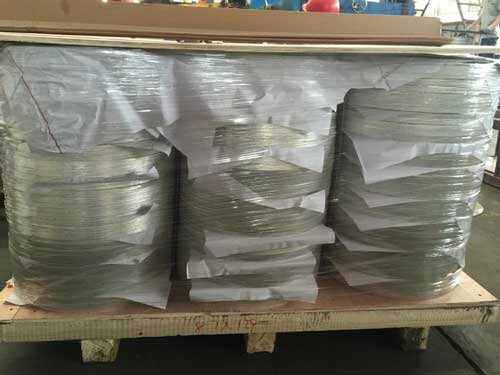
| Packaging | Interleaving / protective film | Reduced scratches and transit damage |
Aluminum discs and aluminum circles for traffic signs provide a reliable foundation for reflective sheeting and printed graphics while keeping installations lightweight, corrosion-resistant, and durable for long outdoor service. By selecting the right alloy and temper-most commonly AA1060 for general signage or AA3003 for higher stiffness-you can improve sign flatness, reduce denting, and extend the life of reflective performance. For buyers, focusing on surface condition, flatness, edge quality, and thickness control ensures the aluminum circle performs not only in the workshop, but also on the road for years.