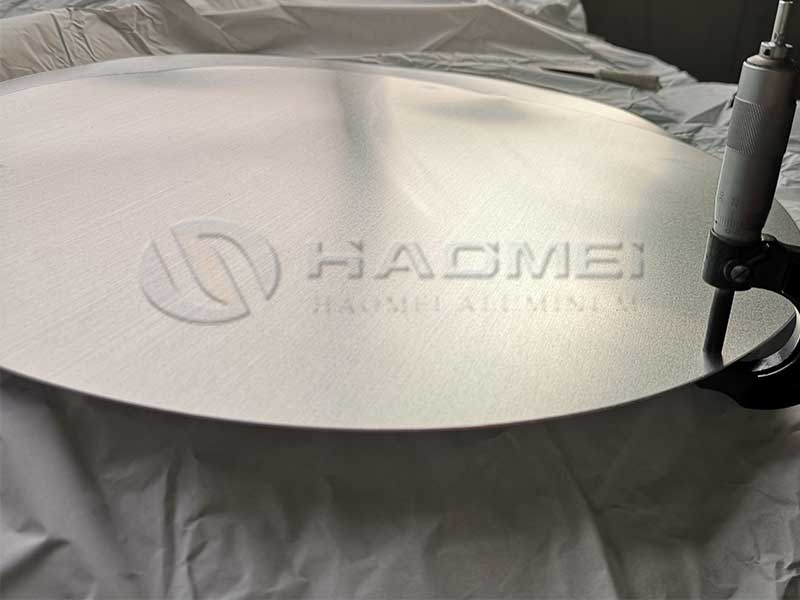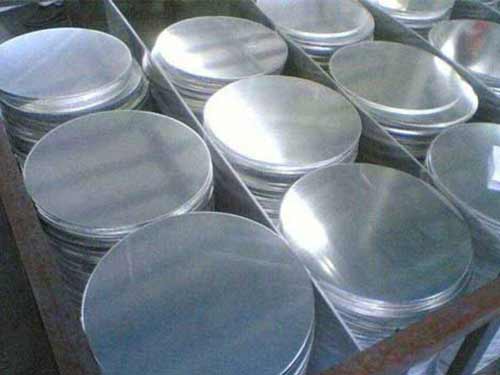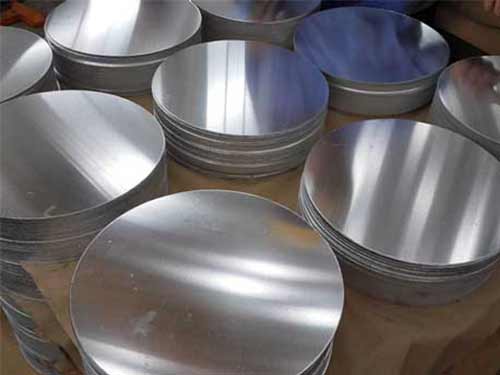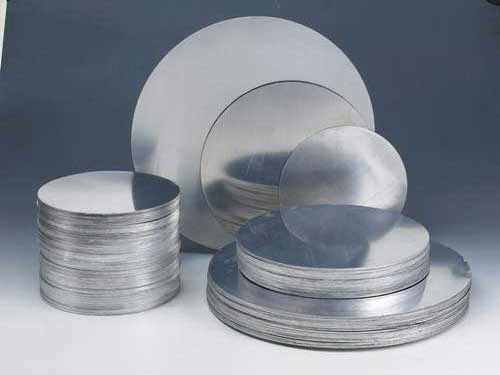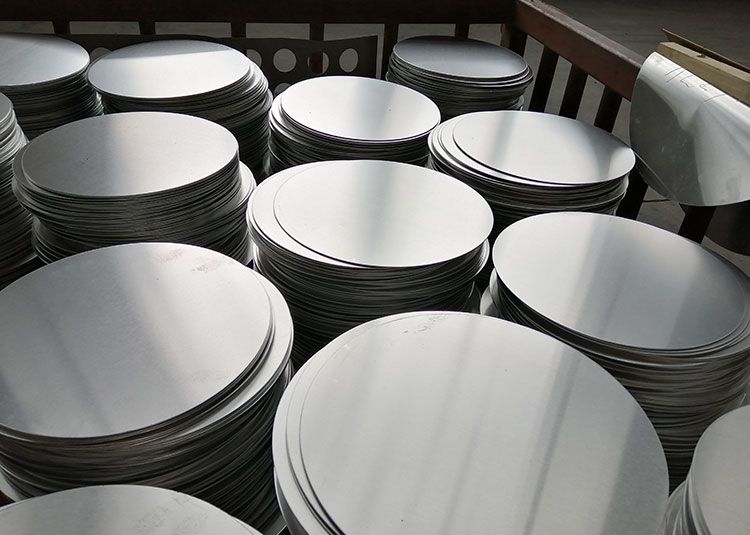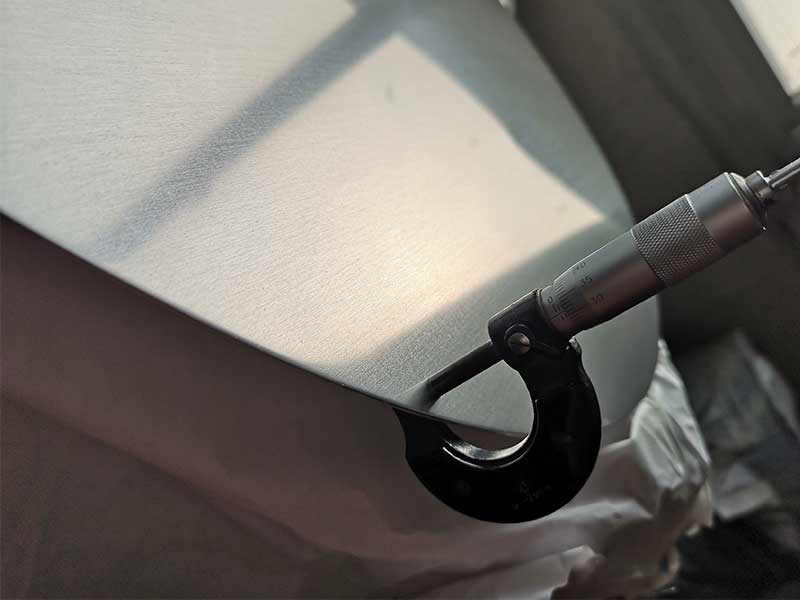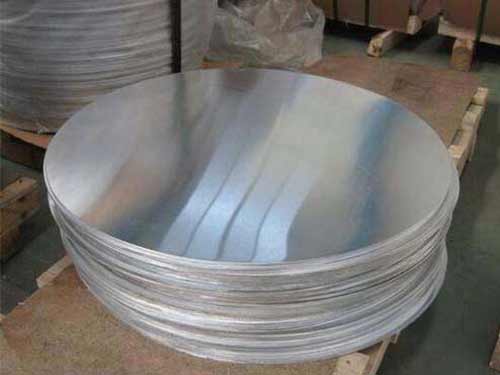

Aluminum circles (also called aluminum discs or blanks) in 0.5 mm to 6 mm thickness are a highly versatile semi-finished product used for deep drawing, spinning, stamping, and machining.
These circles are commonly chosen for cookware, lighting reflectors, traffic signs, tank ends, decorative covers, and many other circular components where formability, corrosion resistance, and cost efficiency matter.
Product name: Aluminum Circle / Aluminum Disc
Alloys: 1100 / 3003
Thickness range: 0.5–6.0 mm
Production routes: DC or CC
Typical processes: blanking → deburring → annealing (as required) → surface inspection → packing
From thin gauge circles for spun lampshades to thicker blanks for machined parts, the value is repeatability: each circle should draw and spin consistently with minimal earing, low risk of tearing, and a clean finish.
features and benefits
1) Excellent forming performance (deep drawing & spinning)
- AA1100 provides very high ductility for deep drawing and spinning, especially in O temper.
- AA3003 offers improved strength while retaining very good workability, reducing deformation risk in parts that must hold shape.
Customer value: fewer cracks, smoother walls, better yield, and faster production.
2) Clean surface and stable anodizing/finishing response
Well-controlled rolling, annealing, and blanking improve:
- surface brightness (important for reflectors)
- coating adhesion (for painted circles)
- consistent appearance after anodizing (especially in 1100)
Customer value: improved aesthetics, fewer rejects from surface defects.
3) Corrosion resistance for daily-use and outdoor components
Both alloys have strong corrosion resistance in common environments:
- 1100 excels in general corrosion resistance due to high aluminum purity
- 3003 improves performance in many practical service conditions, with better strength at similar corrosion resistance levels
Customer value: longer service life, reduced maintenance.
4) Flexible sourcing: DC vs CC to match cost and performance
- DC sheet typically provides better formability and more uniform grain structure, preferred for demanding deep-drawn cookware.
- CC can be more cost-effective for standard parts, with stable supply for high-volume production.
Customer value: optimized total cost depending on forming difficulty and end-use.
Technical specifications (typical supply range)
| Item | Specification |
|---|---|
| Product form | Circles/Discs (blanked from coil or sheet) |
| Alloy | AA1100 / AA3003 |
| Thickness | 0.5–6.0 mm |
| Diameter | Commonly 80–1200 mm (customizable) |
| Temper (typical) | O (annealed), H12/H14/H16/H18 (as requested) |
| Manufacturing route | DC or CC |
| Edge condition | Deburred / smooth edge (recommended for drawing/spinning) |
| Surface | Mill finish; optional brushed / coated film; oiling on request |
| Flatness | Controlled for blanking and forming; tighter control available for reflector use |
| Packaging | Interleaving paper/film + pallet + moisture protection |
Chemical composition (typical, wt.%)
Note: exact limits depend on the standard (ASTM B209 / EN 485 or customer spec). Values below reflect widely accepted typical limits.
AA1100 (commercially pure aluminum)
| Element | Typical limit (wt.%) |
|---|---|
| Al | ≥ 99.00 |
| Si + Fe | ≤ 1.00 (combined) |
| Cu | 0.05–0.20 |
| Mn | ≤ 0.05 |
| Zn | ≤ 0.10 |
| Others (each) | ≤ 0.05 |
| Others (total) | ≤ 0.15 |
AA3003 (Al-Mn alloy)
| Element | Typical limit (wt.%) |
|---|---|
| Si | ≤ 0.60 |
| Fe | ≤ 0.70 |
| Cu | 0.05–0.20 |
| Mn | 1.0–1.5 |
| Zn | ≤ 0.10 |
| Al | Balance |
Mechanical properties (typical guidance)
Mechanical performance depends strongly on temper, thickness, and processing route. For circles used in deep drawing/spinning, O temper is most common; for stiffer stamped parts, H14/H16 are frequent choices.
| Alloy | Temper | Typical tensile strength (MPa) | Typical yield strength (MPa) | Typical elongation (%) |
|---|---|---|---|---|
| 1100 | O | 70–110 | 20–35 | 25–40 |
| 1100 | H14 | 95–135 | 75–115 | 3–10 |
| 3003 | O | 95–140 | 35–55 | 20–35 |
| 3003 | H14 | 130–180 | 110–160 | 3–12 |
Practical implication:
- Choose 1100-O for maximum drawing depth and surface finish.
- Choose 3003-O when you need a better balance of drawing + strength (less "soft" feel).
- Choose H tempers when shape retention matters more than extreme formability.
DC vs CC for aluminum circles: what customers should know
| Topic | DC (Direct Chill) | CC (Continuous Cast) |
|---|---|---|
| Grain uniformity | Generally more uniform | Good, may vary by producer and gauge |
| Deep drawing/spinning | Often superior for demanding parts | Suitable for standard forming and stamping |
| Cost | Typically higher | Often more economical |
| Best fit | Premium cookware, high-draw parts, appearance-sensitive items | High-volume general parts, cost-driven applications |
If your part has tight drawing radii, tall walls, or strict surface requirements, DC-based circles (especially in O temper) are usually the safer choice.
Performance highlights by application
Cookware (pots, pans, pressure cooker components)
- 1100-O / 3003-O are both common.
- 1100: excellent spinning and bright finish.
- 3003: stronger body, improved dent resistance.
Benefits: stable forming, good thermal conductivity, corrosion resistance, clean appearance after polishing/anodizing.
Lighting reflectors and decorative components
- Thin gauges (often 0.5–2.0 mm) need good flatness and surface.
- 1100 is frequently selected for reflectivity and finishing response.
Benefits: consistent reflectance, fewer surface defects, good anodizing outcomes.
Traffic signs, nameplates, and covers
- Often requires coating/printing performance and corrosion resistance.
- Typically H14/H16 for stiffness.
Benefits: good outdoor durability, easy fabrication, reliable coating adhesion.
Tank ends, caps, and industrial blanks
- Thicker range (e.g., 3–6 mm) may be stamped or machined.
- 3003 can provide better rigidity and resistance to handling damage.
Benefits: dependable structural performance with manageable forming loads.
Selection guide (quick decision table)
| Your priority | Recommended alloy/temper | Suggested route |
|---|---|---|
| Maximum deep drawing & spinning | 1100-O | DC preferred |
| Balanced formability + higher strength | 3003-O | DC or CC |
| Stiffness for stamping/flat parts | 1100-H14 or 3003-H14 | CC often sufficient |
| Best appearance for anodizing/reflector | 1100 (O or light H) | DC preferred |
Quality and supply considerations (what to specify on inquiry)
To receive circles that run smoothly on your press or spinning line, include:
- thickness & tolerance, diameter & tolerance
- alloy and temper
- DC or CC requirement
- surface requirement (mill finish / reflector-grade / film protection)
- edge requirement (deburring level)
- intended process: deep drawing, spinning, or stamping
- packing: interleaving, moisture barrier, pallet type
These details help the mill tune rolling/annealing and help the blanking line control burr height and edge smoothness-two major drivers of forming defects.