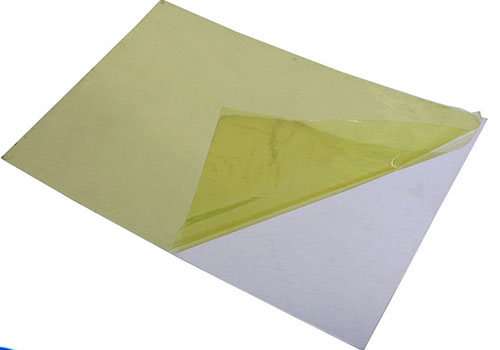
5086 Anodized Polished Mirror Aluminum Alloy Sheet: Strength Meets Reflection
When people think of mirror aluminum sheet, they usually imagine decorative panels or interior finishes. 5086 anodized polished mirror aluminum alloy sheet is different. It is a marine-grade structural material that also behaves like a mirror. That combination – high strength, corrosion resistance, and a highly reflective surface – makes it a quiet workhorse in industries where appearance and performance must coexist.
Instead of seeing it only as a “shiny surface,” it helps to look at 5086 mirror aluminum as a functional engineering material that just happens to have a mirror-quality finish.
What Makes 5086 Special Compared With Other Mirror Aluminum
Many mirror aluminum sheets are made from softer series such as 1xxx or 5xxx low-magnesium alloys, chosen mainly for ease of polishing and bending. Alloy 5086 moves the focus toward mechanical performance and durability:
- It is a high-magnesium 5xxx alloy, with Mg typically around 4.0–4.9%
- It is non-heat-treatable, relying on work hardening temper for strength
- It offers outstanding resistance to seawater and industrial atmospheres
- It keeps good weldability while maintaining structural integrity
In short, 5086 anodized polished mirror aluminum sheet is not just decorative cladding; it is a load-bearing and corrosion-resistant material that can still deliver a specular, mirror-like surface after proper polishing and anodizing.
Typical Applications From a Performance-First Perspective
Because 5086 combines structural strength with visual quality, it is used in applications where the surface is both seen and stressed:
- Marine environments: yacht superstructures and interiors, bulkheads, decorative panels for cruise ships, reflective surfaces in cabins and corridors that must endure salt spray
- Transportation: reflective body panels for specialty vehicles, trailers, refrigerated trucks, bus interiors and trims where both stiffness and clean appearance matter
- Architecture: façade elements, curtain wall inserts, decorative cladding in coastal buildings, reflective ceilings in terminals and stations
- Industrial and equipment: enclosures and housings, cleanroom panels, machine covers where easy cleaning, corrosion resistance, and high reflectivity are needed
Instead of thinking “mirror sheet for decoration,” consider 5086 anodized mirror sheet as a hybrid: part structural panel, part functional reflector, part design element.
Alloy Tempers and Their Practical Meaning
Since 5086 is strengthened by cold working, the choice of temper directly affects formability, strength, and final appearance after anodizing and polishing.
Common tempers for 5086 anodized polished mirror sheet include:
- O (annealed): Very soft, excellent formability, used where deep drawing or complex forming is needed before polishing and anodizing. Not typical for load-bearing uses.
- H111: Slightly strain-hardened, good balance of formability and strength. Suitable for curved panels, flanging, and moderate forming.
- H112: As-fabricated with minimal strain hardening, used mostly for thick plates and structural parts.
- H32 / H34: Strain-hardened and partially annealed. H32 offers medium strength with good workability; H34 is stronger but less formable. These are common choices for thin to medium gauge mirror sheets where flatness and stiffness matter.
- H116 / H321: Special marine tempers, controlled for improved exfoliation and stress-corrosion resistance in seawater. Ideal for marine mirror panels and coastal architecture.
The typical selection logic is simple:
More forming required → softer temper (O, H111)
More stiffness and strength needed → harder temper (H32, H34, H116, H321)
After choosing a temper, the sheet is polished and anodized. The better the surface quality and flatness from the mill, the better the final mirrored effect.
Surface Finishing: From Mill Sheet to Mirror
The polished mirror effect on 5086 comes from a controlled sequence:
- Precision rolling to achieve very smooth base surface and controlled flatness
- Mechanical or chemical polishing, often including buffing steps, to create a high-gloss or specular finish
- Anodizing to lock in the surface, enhance corrosion resistance, and stabilize color and reflectivity
The anodized layer is transparent and very hard. It protects the base aluminum from abrasion, fingerprints, and corrosion while preserving the reflective character. Depending on application, the anodic film thickness is typically in the range of about 8–25 μm, adjusted to meet standards and use conditions.
Implementation Standards and Typical Specifications
5086 anodized polished mirror aluminum sheets are usually produced and certified under recognized standards, such as:
- EN 485, EN 573, EN 515 and related European standards for aluminum sheet and strip
- ASTM B209 for aluminum and aluminum-alloy sheet and plate
- Marine classification requirements (DNV, ABS, LR, etc.) when used in shipbuilding
Common supply parameters include:
- Thickness range: approximately 0.5 mm to 8.0 mm for mirror-finish sheet, with heavier gauges available as plate
- Width: up to 1500–2000 mm depending on mill capacity
- Length: standard cut lengths and customizable sizes; coil form also available for continuous fabrication
- Surface quality: high-reflective mirror, bright mirror, or directional polished surface; optional protective film on one or both sides
- Reflectivity: total reflectance often above 80% for polished surfaces, higher for premium mirror grades
Mechanical Properties Overview
Typical room-temperature mechanical properties for 5086 sheet (values vary by temper and thickness; reference only):
- Density: ~2.65 g/cm³
- Tensile strength (Rm): approx. 240–330 MPa (H32 range; higher for H34/H116)
- Yield strength (Rp0.2): approx. 125–260 MPa depending on temper
- Elongation: approx. 8–20% depending on temper and thickness
- Modulus of elasticity: ~70 GPa
The point is that 5086 maintains much higher strength than most decorative mirror aluminum alloys, especially in marine tempers.
Chemical Composition Table of 5086 Alloy
Typical chemical composition limits of 5086 aluminum alloy (mass percentage, %):
Mg: 3.5–4.5
Mn: 0.2–0.7
Cr: 0.05–0.25
Si: ≤ 0.40
Fe: ≤ 0.50
Cu: ≤ 0.10
Zn: ≤ 0.25
Ti: ≤ 0.15
Other, each: ≤ 0.05
Other, total: ≤ 0.15
Al: Balance
Magnesium is the main strengthening element, while manganese and chromium help refine grain structure and improve corrosion resistance. The low copper content is deliberate, since copper tends to reduce seawater corrosion performance.
Corrosion Resistance and Anodizing Behavior
From an electrochemical perspective, 5086 belongs to the 5xxx (Al–Mg) family, known for their excellent resistance to seawater, chlorides, and many industrial environments. When anodized, the alloy forms a stable oxide layer that further isolates it from aggressive media.
advantages in service:
- Excellent resistance to pitting and crevice corrosion in marine environments
- Good resistance to industrial pollution and urban atmospheres
- Stable appearance under UV exposure when properly anodized
- Suitable for contact with many food and chemical products, depending on process conditions
The anodized mirror surface is not only decorative; it is a functional barrier that slows down wear and corrosion, making 5086 suitable for long-term applications where maintenance access may be limited.
Processing and Fabrication Considerations
When designing with 5086 anodized mirror sheet, it helps to think in terms of process sequence:
- Form first, then polish and anodize for critical mirror surfaces, especially with complex shapes
- For simple flat panels, mill-finished 5086 sheet may be polished and anodized directly
Important fabrication points:
- Excellent weldability with common processes (MIG, TIG); however, allow for strength reduction in the heat-affected zone, especially in highly loaded structures
- Good cold formability in softer tempers; tighter bends should be oriented correctly relative to the rolling direction
- Use clean tools and soft protective materials to avoid scratching the mirror surface during cutting, bending, and installation
- Apply protective film during processing and transport to keep the mirror finish intact
Balancing Aesthetics and Engineering
What makes 5086 anodized polished mirror aluminum alloy sheet is know is its dual role. Designers see a bright, reflective surface that can enlarge visual space, improve light distribution, and deliver high-end appearance. Engineers see a marine-grade aluminum with proven strength and corrosion resistance.
Where both perspectives meet – on a yacht, in a coastal building, inside a high-end vehicle, or on equipment that must be both durable and visually clean – 5086 mirror sheet is often the quiet but decisive material choice.
By its alloy system, tempers, standards, and chemical makeup, you can specify 5086 anodized polished mirror aluminum sheet confidently, not just for how it looks today, but for how it will perform and endure over years of service.