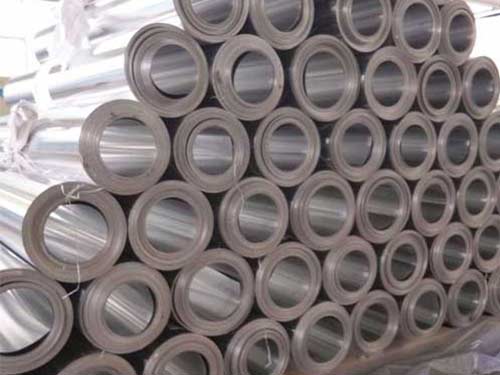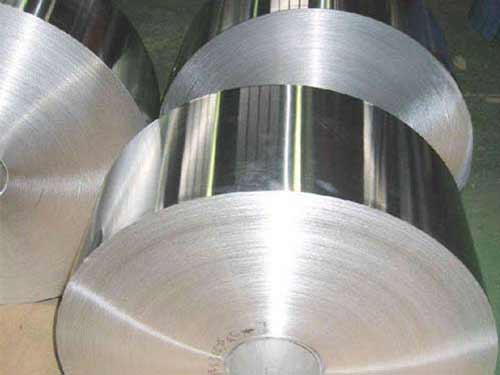

Aluminum Foil for Electrolytic Capacitor Anode and Cathode: Superior Electrical Properties for High‑Speed Circuits
In high‑speed electronics, an electrolytic capacitor is often treated as a "bulk" component-useful, necessary, and slightly inconvenient. Yet in fast power rails, CPU/GPU VRMs, telecom rectifiers, automotive DC‑link stages, and servo drives, the capacitor is not a passive bystander. It is an active part of the signal environment, shaping impedance vs. frequency, controlling ripple current, and deciding whether a rail stays quiet or starts to ring.
From a distinctive viewpoint, capacitor aluminum foil is not merely a current collector. It is a carefully engineered electromagnetic surface: a conductor with micro‑topography, oxide‑forming behavior, metallurgical texture, and controlled impurities that together determine ESR, ESL, leakage, and long‑term stability. When your circuit edges get faster, the foil's electrical behavior becomes more "visible" to the system.
Why foil matters more as switching gets faster
High‑speed circuits punish parasitics. Ripple current and dV/dt excite losses and inductive behavior. Aluminum electrolytics and hybrid capacitors rely on foil in two distinct roles:
Anode foil
The anode is the "capacity engine." It is etched to create enormous surface area, then anodized to form an Al₂O₃ dielectric. The foil's purity, grain structure, and controlled trace elements influence etch morphology and oxide integrity. In high‑frequency ripple environments, uniform oxide and low defect density help maintain stable leakage and prevent localized heating.
Cathode foil
The cathode is the return electrode. It may be lightly etched or unetched, then treated to optimize contact with electrolyte or conductive polymer. In fast transient conditions, the cathode foil's conductivity and surface treatment directly affect ESR and the effective high‑frequency impedance.
The insight for high‑speed designs is that foil is where electrochemistry meets transmission‑line behavior. A small change in foil resistivity, thickness, or surface condition can shift ripple heating and impedance peaking-especially when the capacitor is operated near its ripple current rating or in compact layouts where thermal margins are thin.
Electrical performance targets that translate into circuit benefit
Designers often ask for "low ESR" and "high ripple current." For foil selection, those outcomes are produced by specific physical and metallurgical targets:
Low resistivity and stable conductivity
High‑purity aluminum provides lower resistivity and improved forming behavior. For current collection at high ripple, conductivity matters because foil contributes to I²R loss-especially along the current path length inside wound elements.
Controlled thickness tolerance and flatness
Thickness affects resistance per square and mechanical winding behavior. Tight tolerance reduces variation in ESR across production lots, which improves predictability in high‑speed power stages.
Surface condition that supports the intended electrochemistry
Etch structures must be uniform and repeatable. For anode foil, the etched tunnels and pits should form consistently across coil length, enabling stable capacitance and breakdown behavior. For cathode foil, surface treatment should maintain low interfacial resistance with electrolyte or polymer.
Cleanliness and impurity control
Certain trace elements can either help or harm, depending on function. Iron and silicon can raise resistivity and influence etch uniformity. Copper, while conductive, can compromise corrosion behavior and leakage stability if not controlled.
Recommended foil parameters for capacitor anode and cathode (typical industrial ranges)
Actual values are chosen based on capacitor type, rated voltage, electrolyte system, and target impedance profile. The ranges below reflect common practice in electrolytic capacitor foils used for high‑ripple, fast‑switching environments.
Anode foil (high‑purity etched & formed foil)
Base material: high purity aluminum, commonly 99.99% (4N) or higher for high performance anodes
Thickness range: about 60 μm to 110 μm for many power electrolytics; thinner foils are also used depending on design targets
Capacitance (after etch and forming): often expressed as capacitance per area (μF/cm²) at a specified forming voltage; values vary widely with etch recipe and voltage class
Forming voltage compatibility: selected per rated voltage; the forming process creates dielectric thickness proportional to forming voltage
Tensile behavior: engineered for winding integrity; the foil must resist tearing at high line speed while maintaining etchability
Surface: high surface area etch, with controlled pit geometry; oxide film formed to meet leakage and breakdown targets
Cathode foil (etched or unetched, treated)
Base material: typically high purity aluminum; purity level depends on performance tier
Thickness range: often 20 μm to 60 μm in many designs, balancing conductivity and compactness
Surface treatment: optimized for electrolyte wettability and low interfacial resistance; may include light etch or specialized cathode treatments for ESR reduction
Mechanical temper: selected to maintain stable winding and minimize edge defects that could elevate leakage or short risk
When "superior electrical properties for high‑speed circuits" are specified, it usually implies tighter control on thickness tolerance, lower defect density, stricter impurity limits, and surface treatments that keep interfacial resistance low over life-especially under high ripple heating.
Alloy, tempering, and why "softness" is an electrical feature
Capacitor foil is commonly based on AA1xxx series aluminum because purity supports etching and stable oxide formation. The temper is usually soft annealed because:
Soft temper improves etch uniformity
Annealed foil offers more consistent microstructure, supporting repeatable tunnel etching and reducing localized over‑etching that can become hot spots under ripple.
Soft temper improves winding and reduces microcracks
Wound capacitors are mechanically demanding. Microcracks at edges or on the surface can become field concentrators in formed oxide, affecting leakage and breakdown reliability.
Texture and grain size influence oxide quality
The crystallographic orientation distribution can affect forming behavior. Stable oxide is not only a chemical product but also a metallurgically conditioned outcome.
Common temper designations used in capacitor foil supply include O temper (fully annealed). In some cases, lightly work‑hardened tempers are used when higher strength is needed, but the trade‑off is usually in etch response and oxide consistency.
Implementation standards and production controls that matter in real capacitors
Capacitor foil sits at the intersection of metallurgy, rolling technology, surface science, and quality systems. While end users may not always specify a single universal standard for "capacitor foil," the following standards and controls are widely used to anchor quality and compliance:
Chemical composition and aluminum alloy requirements
Standards such as ASTM B479 (aluminum foil for capacitor applications) are often referenced in the industry for material expectations, alongside internal specifications that tighten impurity limits for high‑end foils.
General aluminum composition and wrought aluminum requirements
Framework standards such as ASTM B209 may be referenced for dimensional and general properties in supply chains, while capacitor foils typically apply additional, stricter rules.
Quality management and process traceability
Many capacitor foil producers and capacitor manufacturers operate under ISO 9001, and automotive‑oriented programs frequently require IATF 16949 alignment for traceability and process capability.
Cleanliness and surface defect control
In high‑speed power electronics, microscopic contamination can become macroscopic ESR drift. Practical controls include rolling oil management, degreasing protocols, particulate limits, and edge‑trim quality, all tied to incoming inspection items such as pinholes, surface streaks, and edge burr standards.
From a system perspective, these "factory details" directly connect to a customer's field problems: heat rise, ripple derating, leakage drift, and early‑life failures.
Chemical properties: typical composition targets for capacitor-grade aluminum foil
Capacitor anode foil often uses very high purity aluminum to maximize etchability and oxide quality. Cathode foil may allow slightly different limits depending on design targets, but premium high‑speed capacitor applications tend to use tight impurity control on both.
Below is a representative composition table for high‑purity capacitor aluminum foil. Exact limits vary by supplier, grade, and whether the foil is intended for anode or cathode use.
Typical chemical composition table (capacitor-grade high purity aluminum foil)
| Element | Typical Control Range (wt%) | Electrical / Process Relevance |
|---|---|---|
| Al | ≥ 99.99 | Higher purity supports lower resistivity, uniform etch morphology, stable oxide formation |
| Fe | ≤ 0.004 | Excess Fe can increase resistivity and disturb etch uniformity; may create localized defects |
| Si | ≤ 0.003 | Affects conductivity and etch response; too high can reduce forming stability |
| Cu | ≤ 0.002 | Can accelerate corrosion behavior and leakage instability if not controlled |
| Mn | ≤ 0.002 | Generally kept low to avoid altering etching and electrical behavior |
| Mg | ≤ 0.002 | Controlled to maintain stable forming and minimize unwanted oxide behavior |
| Zn | ≤ 0.002 | Controlled for corrosion/electrochemical stability |
| Ti | ≤ 0.001 | Grain refiner in some aluminum products, but typically minimized for capacitor foil consistency |
| Others (each) | ≤ 0.001 | Trace control reduces defect risk and keeps etch/forming repeatable |
| Others (total) | ≤ 0.010 | Maintains high purity and consistent electrical performance |
If your target is superior high‑frequency performance, the "boring" part-trace limits-becomes a design lever. Lower impurity variability often translates into narrower ESR distribution, more predictable ripple heating, and more stable life testing outcomes.
How foil engineering maps to ESR and ripple current in fast switching
In high‑speed circuits, the capacitor's impedance curve matters more than its nominal capacitance. Foil selection influences that curve through several paths:
Foil resistance contribution to ESR
Thicker foil and higher conductivity reduce path resistance, but must be balanced against winding volume and heat transfer.
Interfacial resistance at the cathode
Cathode surface treatment and cleanliness strongly affect the contact resistance between foil and electrolyte or polymer-often the dominant contributor to ESR at higher frequencies.
Thermal behavior and ripple derating stability
Even small ESR improvements can reduce internal heat rise significantly under heavy ripple. Since electrolytic life is temperature‑sensitive, foil quality indirectly affects service life in high‑speed rails.
Consistency across length and width
High‑speed circuits are sensitive to part‑to‑part spread. Tight rolling tolerances, stable anneal practice, and controlled surface treatment reduce statistical extremes that can cause outliers in impedance and heat rise.
Product positioning: what "superior electrical properties" should mean in procurement language
When specifying aluminum foil for electrolytic capacitor anode and cathode aimed at high‑speed circuits, "superior electrical properties" becomes meaningful when tied to measurable expectations such as:
Low and consistent bulk resistivity tied to purity and process control
Stable thickness and flatness to support uniform current distribution and winding quality
Surface and cleanliness controls that preserve low interfacial resistance after aging
Defect limits for pinholes, edge cracks, and inclusions to reduce leakage and early failure risk
Metallurgical state (typically O temper) optimized for etching, forming, and mechanical robustness
These are the foil‑level truths that ripple upward into capacitor ESR, ripple current rating, and real‑world rail stability.
Aluminum foil for capacitor anode and cathode: a material that behaves like a circuit element
If you are developing or sourcing capacitors for high‑speed power electronics, selecting the right capacitor-grade aluminum foil-anode and cathode-becomes a performance decision, not a commodity purchase.