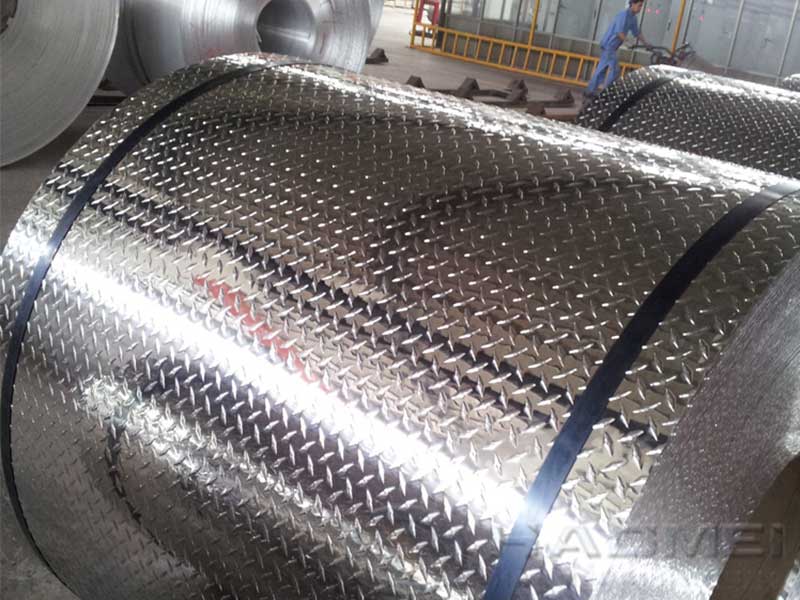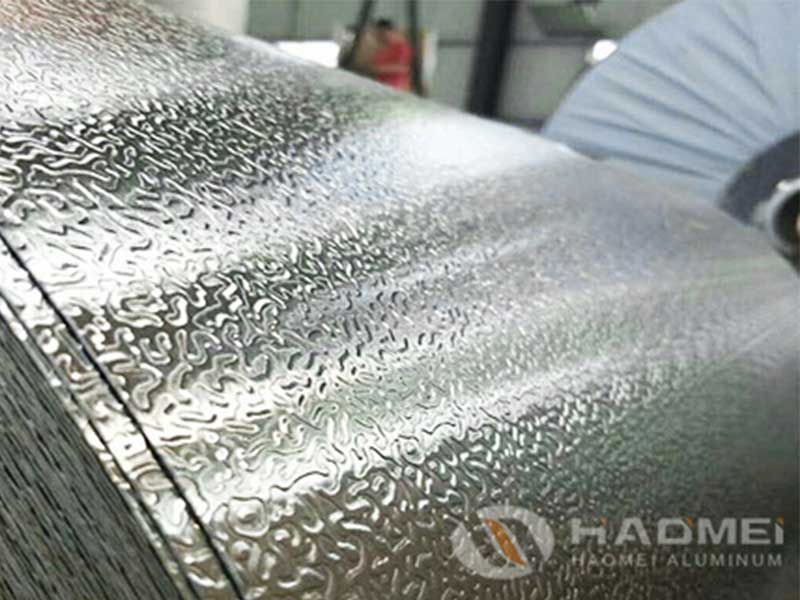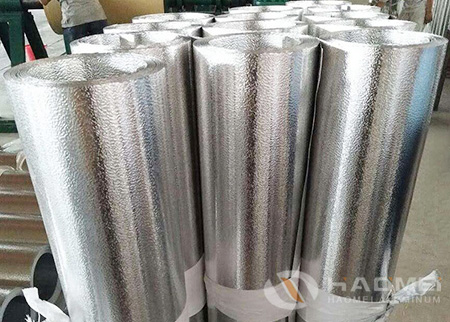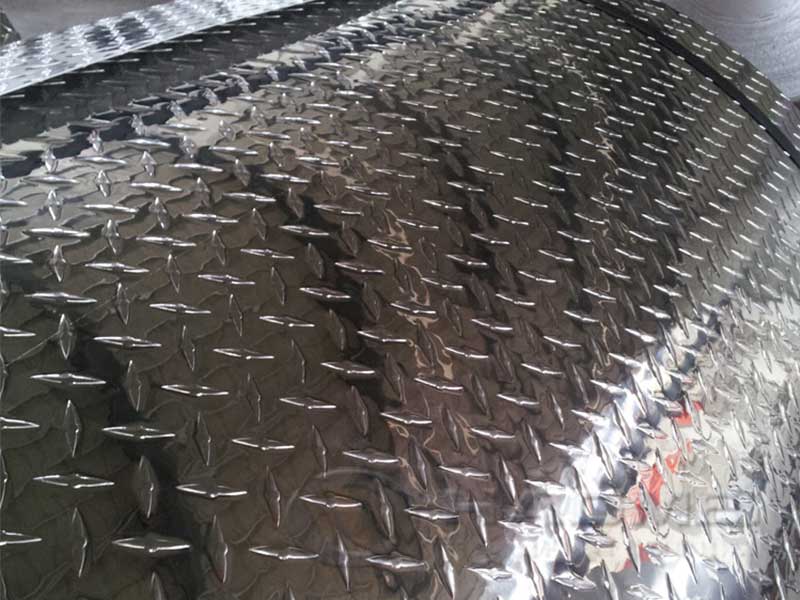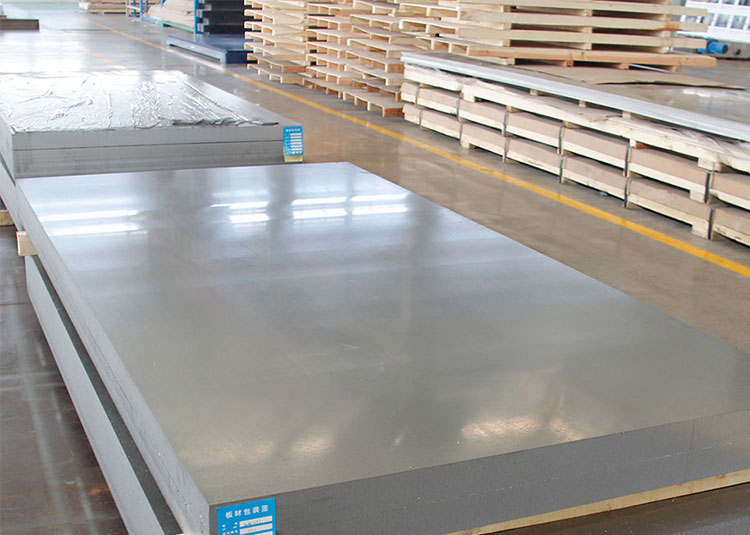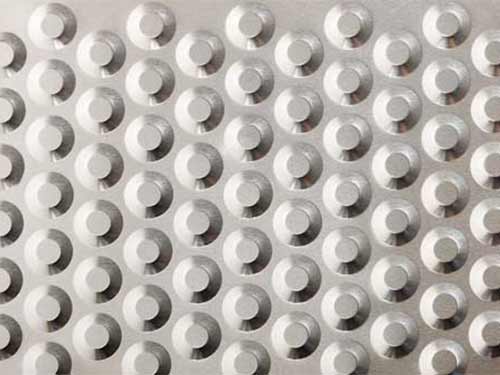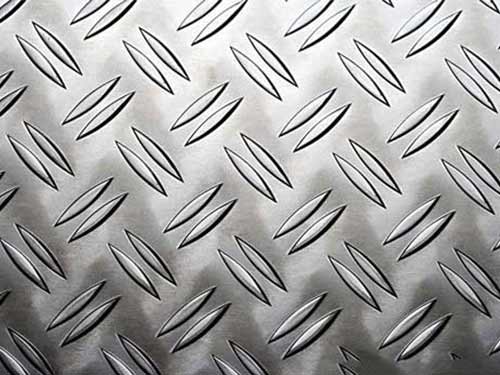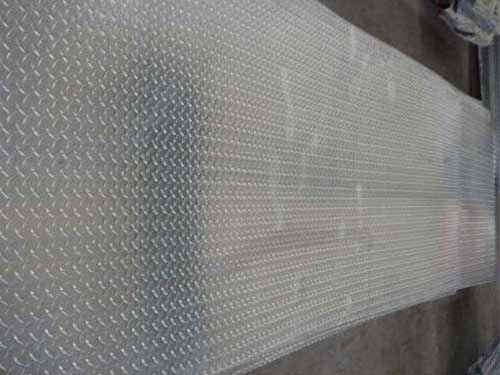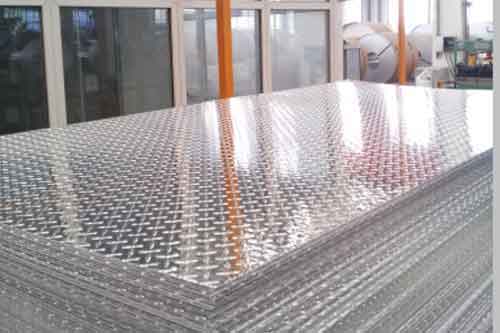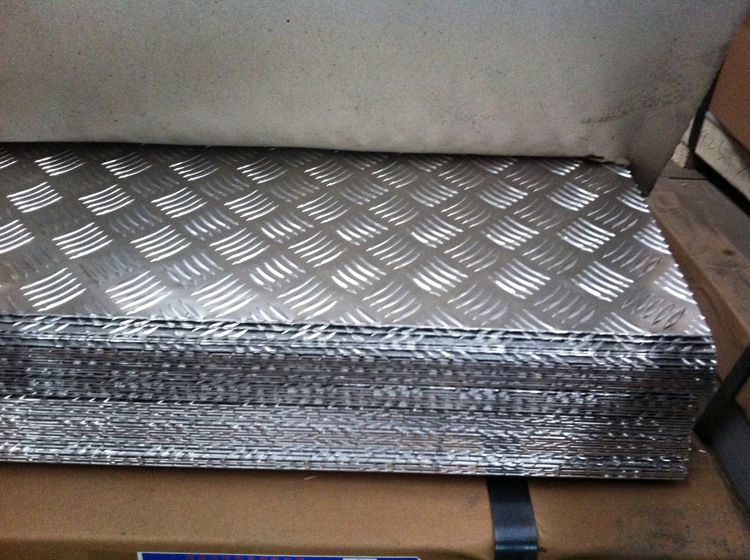

Diamond checker Alloy 3003 embossed aluminum sheet (also called tread plate or chequer plate) is a lightweight, corrosion-resistant sheet product featuring a raised diamond pattern designed for traction, durability, and visual definition. Built on the dependable 3003 aluminum-manganese alloy family, it delivers an excellent balance of formability, weather resistance, and cost efficiency-making it a favorite for flooring, steps, ramps, toolboxes, vehicle bodies, cladding, and general industrial protection.
Unlike plain sheet, the embossed pattern adds functional grip and surface stiffness while keeping weight low. For customers who need a fast-to-install, long-life anti-slip surface without the maintenance burden of steel, 3003 diamond checker plate is a practical, widely available solution.
What Makes Alloy 3003 Diamond Checker Plate Distinct
Alloy 3003 is an Al-Mn alloy known for strong corrosion resistance and very good workability. When it is embossed into a diamond checker pattern, the sheet gains additional benefits that matter on the shop floor and in the field:
- Enhanced slip resistance on wet, oily, dusty, or high-traffic surfaces
- Improved stiffness versus flat sheet of the same thickness, helping reduce "oil-canning"
- Attractive industrial finish that hides minor scuffs better than smooth surfaces
- Excellent forming and fabrication for bending, cutting, and fitting around structures
- Low density for weight-sensitive applications like trailers and service vehicles
Common tempers include H22 and H24, chosen for a useful blend of strength and formability. The diamond pattern is typically rolled in-line, providing consistent texture and repeatable appearance.
Typical Chemical Composition (Alloy 3003)
Alloy 3003 is standardized in major specifications (such as ASTM and EN equivalents). Actual composition may vary by producer and certification, but the following ranges are widely used for reference.
| Element | Typical Range (wt.%) | Role in Performance |
|---|---|---|
| Aluminum (Al) | Remainder | Base metal, corrosion resistance, conductivity |
| Manganese (Mn) | 1.0–1.5 | Strengthening, improves corrosion resistance and work hardening |
| Copper (Cu) | 0.05–0.20 | Adds strength; controlled to preserve corrosion resistance |
| Iron (Fe) | ≤ 0.7 | Impurity control; affects surface and toughness |
| Silicon (Si) | ≤ 0.6 | Impurity control; influences castability and surface |
| Zinc (Zn) | ≤ 0.1 | Minor; controlled for stability |
| Others (each) | ≤ 0.05 | Residual elements |
| Others (total) | ≤ 0.15 | Residual elements |
Features Customers Notice Immediately
Traction and Safety
The raised diamond pattern increases surface friction underfoot and under load. This is particularly valuable for steps, platforms, trailer decks, and ramps where water or dust can reduce grip. Many customers select checker plate specifically to reduce slip incidents without applying additional coatings.
Corrosion Resistance That Fits Real Environments
3003 aluminum naturally forms an oxide layer that resists corrosion in atmospheric exposure and many mild chemical environments. In outdoor use, it typically outperforms carbon steel by avoiding red rust and minimizing long-term maintenance.
Easy to Fabricate, Easy to Fit
3003 is well known for its forming capability. It cuts cleanly with common tools, bends reliably in brake forming, and can be riveted, bolted, or welded using suitable aluminum welding practices. This makes it ideal for on-site fabrication and quick retrofits.
Lightweight Strength for Mobile Equipment
Aluminum's low density makes checker plate a strong candidate for transportation equipment where payload and fuel economy matter. You get a rigid, functional surface without adding unnecessary mass.
Technical Specifications (Typical Supply Options)
Specifications vary by mill and region. The table below reflects common market ranges for diamond checker 3003 sheet/plate used in industrial and transportation sectors.
| Item | Typical Options | Notes |
|---|---|---|
| Alloy | 3003 | Al-Mn alloy with excellent formability |
| Temper | H22, H24 (common) | H24 typically higher strength than H22 |
| Base thickness (flat) | 1.0–6.0 mm (common) | Thicker options available by request |
| Pattern height (raised) | ~0.8–1.5 mm (typical) | Depends on roller design and thickness |
| Width | 1000–1500 mm (common) | Custom slitting available |
| Length | 2000–6000 mm (common) | Also supplied in coils for some thicknesses |
| Surface finish | Mill finish, bright finish (optional) | Protective film optional |
| Pattern type | Diamond checker (tread) | Orientation matters for aesthetics and traction direction |
| Standard references | ASTM B209 (typical), EN equivalents | Confirm compliance per project |
Practical Note on Thickness
For checker plate, purchasing decisions often depend on base thickness and overall thickness (base + pattern). If your design must meet a strict clearance or fit into channels, confirm whether your drawing calls for base thickness or total thickness.
Typical Mechanical Performance (Guidance Values)
Mechanical properties depend on thickness, temper, and manufacturing route. The values below are commonly referenced for 3003 in H22/H24 tempers and are provided as practical guidance for designers and buyers.
| Property | 3003-H22 (typical) | 3003-H24 (typical) | Why It Matters |
|---|---|---|---|
| Tensile strength | ~130–180 MPa | ~160–200 MPa | Load capacity and dent resistance |
| Yield strength | ~70–140 MPa | ~110–160 MPa | Deflection control, structural feel |
| Elongation | ~4–12% | ~3–10% | Forming margin for bends and fits |
| Density | 2.73 g/cm³ | 2.73 g/cm³ | Lightweight construction |
| Thermal conductivity | ~190–210 W/m·K | ~190–210 W/m·K | Heat dissipation for enclosures, floors near equipment |
Applications That Benefit Most from Diamond Checker 3003
Vehicle and Trailer Flooring
Diamond checker plate is widely used for trailer decks, truck step pads, service-body tops, and van interiors. It provides grip, resists weather, and stands up to repeated loading from tools, carts, and boots.
Why 3003 works well here: corrosion resistance, light weight, and easy fabrication for custom layouts.
Stairs, Platforms, Walkways, and Ramps
Industrial access systems frequently use checker plate to improve safety. It's also a practical alternative to coated steel where paint chipping and rust become ongoing issues.
Typical uses: plant walkways, mezzanine steps, loading ramps, maintenance platforms.
Toolboxes, Guards, and Protective Skins
The embossed surface hides handling marks and adds rigidity to panels. Many fabricators use it for toolbox shells, equipment guards, kick plates, and protective wall linings in utility areas.
Bonus benefit: strong appearance and tactile "industrial" finish without complex surface treatments.
Building and Architectural Utility Panels
While not a polished architectural cladding in the traditional sense, 3003 diamond checker plate is used in corners, base protection, door kick plates, and utility cladding-especially in warehouses, garages, and service corridors.
Why it's chosen: durable surface that tolerates contact and abrasion better than smooth sheet.
Marine and Coastal Utility Use
In coastal atmospheres, aluminum's corrosion resistance is attractive for non-structural decking, steps, and enclosure panels. For direct seawater immersion or highly aggressive marine exposure, alloy selection and protective finishing should be reviewed, but for many coastal utility applications, 3003 remains a cost-effective choice.
Fabrication and Handling Notes (What Customers Appreciate)
| Operation | Practical Guidance | Result |
|---|---|---|
| Cutting | Carbide saws, shears, CNC routing common | Clean edges with minimal burrs when properly set |
| Bending | Allow for pattern orientation; use proper die radius | More consistent bends and better appearance |
| Welding | Suitable aluminum filler selection; clean oxide layer | Strong joints for guards, frames, and assemblies |
| Fastening | Rivets/bolts common; isolate dissimilar metals | Reduced galvanic corrosion risk |
| Surface protection | Film, packaging paper, careful stacking | Preserves appearance during transport and fabrication |
Pattern orientation can influence both aesthetics and directional traction. Many customers align diamonds along the primary walking or loading direction for a uniform visual flow.
Choosing the Right Sheet for Your Project
| Project Need | Recommended Focus | Why |
|---|---|---|
| Maximum grip | Higher pattern definition, correct orientation | Improved traction in wet/dirty conditions |
| Better dent resistance | Thicker base and H24 temper | Stiffer feel and improved surface durability |
| Tight forming requirements | H22 temper, confirm bend radius | More forgiving fabrication |
| Outdoor durability | Verify alloy/temper, consider finish or coating | Longer service life, stable appearance |
| Weight-sensitive builds | Optimize thickness and panel layout | Strength-to-weight advantage |
Diamond checker Alloy 3003 embossed aluminum sheet combines the practical corrosion resistance and formability of 3003 with a raised tread pattern that adds traction, stiffness, and a rugged industrial appearance. It excels in transportation flooring, industrial access surfaces, protective panels, and utility cladding where safety, low maintenance, and lightweight performance are key. For fast fabrication and dependable service life across a wide range of environments, 3003 diamond checker plate remains one of the most versatile and cost-effective choices in embossed aluminum sheet products.