
In high-performance building envelopes, the thermal break is rarely seen, yet it quietly decides whether a frame feels warm in winter, resists condensation on humid mornings, and meets demanding energy codes without adding bulk. A new aluminium strip thermal break approach reframes that role: instead of treating the strip as a passive spacer, it becomes a precisely engineered heat-flow governor that balances insulation, structural load transfer, and long-term dimensional stability.
Why an Aluminium Strip Thermal Break Still Matters in a World of Polymers
Polyamide (PA66 GF) is widely used as the insulating core in thermal-break systems, so why talk about aluminium strips at all? Because many thermal-break architectures rely on aluminium strip in critical roles, such as:
- Reinforcement and bridging elements that stabilize complex profiles
- Hybrid thermal break systems where aluminium strip is used as a carrier, cap, or multi-layer barrier with coated surfaces
- Precision insert strips for certain curtain wall, door, and industrial frame geometries where tight tolerances and repeatable crimping are essential
- Process-friendly transition pieces in roll-forming, knurling, and crimp assembly lines
From a thermal design standpoint, the "new" part is not simply material selection-it's geometry optimization, controlled temper, and surface/edge condition designed to reduce parasitic heat paths while improving mechanical reliability.
A Distinctive Technical View: The Strip as a Heat-Path Editor
Heat does not travel through a frame like water through a pipe; it spreads through the easiest continuous conductive route. Aluminium has high thermal conductivity, so the goal is not to "pretend aluminium is insulating," but to interrupt continuity intelligently:
- Minimize effective cross-sectional conductive area where the strip could become a bridge
- Increase interface resistance via coatings or engineered surface roughness at selected zones
- Control mechanical strain so the strip does not relax and re-create tight conductive contact over years of thermal cycling
The best-performing solutions treat the aluminium strip like a carefully tuned component: strong where it must carry load, thin or interrupted where it could steal U-value performance.
Product Positioning: New Aluminium Strip Thermal Break for Modern Profiles
A high-quality aluminium strip used in thermal break systems typically targets:
- Window and door systems for residential and commercial buildings
- Unitized curtain walls and façade framing
- Cold-chain doors, industrial enclosures, refrigerated logistics partitions
- High-humidity environments where condensation control is critical
The "new" generation emphasizes consistent temper, cleaner surfaces for bonding or crimping, and tighter dimensional capability for automated assembly.
Parameters for Aluminium Strip Thermal Break Applications
Below are practical parameters commonly specified for thermal-break-related aluminium strip. Actual values can be tailored to profile design, assembly method, and required standards.
Dimensional range
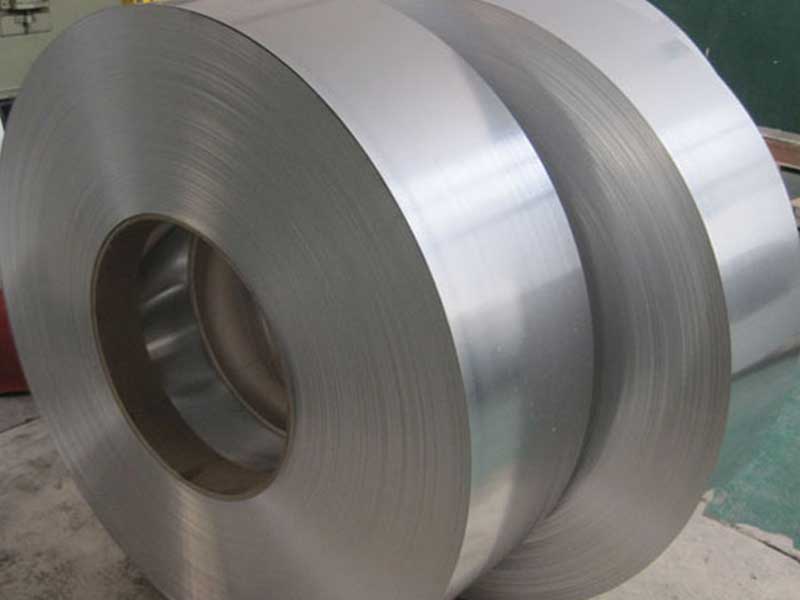
- Thickness: 0.20–1.50 mm
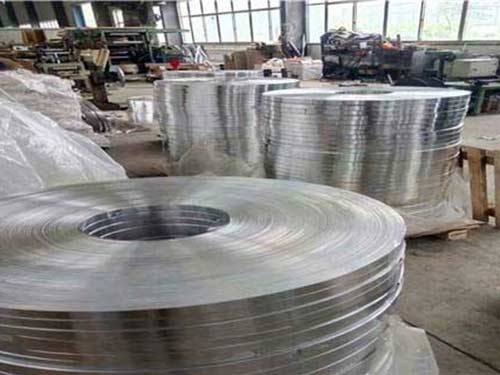
- Width: 10–120 mm
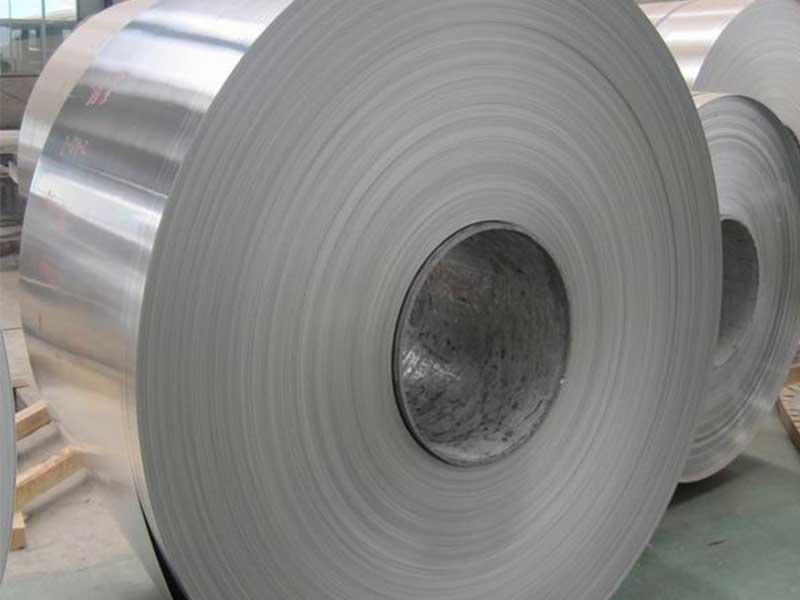
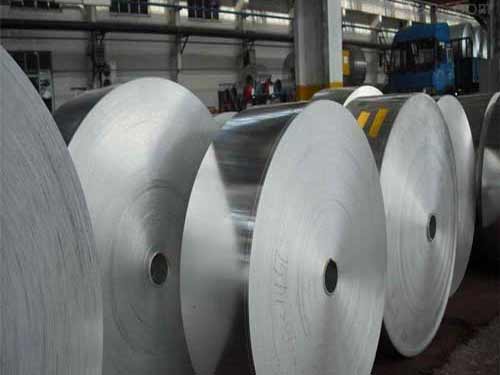
- Coil ID: 150/300/400/500 mm (customizable)
- Coil OD: up to 1200–1800 mm depending on line capability and transport limits
Tolerances and flatness
- Thickness tolerance: typically ±0.01 to ±0.05 mm depending on gauge
- Width tolerance: typically ±0.05 to ±0.20 mm
- Edge camber and flatness controlled for stable feeding in crimp/roll-form lines
Surface and edge condition
- Mill finish, degreased, or chemically cleaned for consistent bonding
- Optional conversion coating or primer compatibility for adhesive systems
- Edge: slit edge with controlled burr direction and height, rounded edge optional to reduce stress concentration and improve handling safety
Mechanical performance targets
- Yield strength and elongation tuned by temper selection to prevent cracking in forming while maintaining clamp force after crimping
- Fatigue resistance under thermal cycling emphasized for façade durability
Alloy Selection: Why 3xxx and 6xxx Families Are Often Chosen
Selecting an alloy for aluminium strip thermal break roles is less about absolute strength and more about formability, stability, corrosion behavior, and joining compatibility.
AA 3003 / 3005 (Al-Mn series)
- Excellent formability and good corrosion resistance
- Stable properties and widely available for coil supply
- A strong candidate when the strip is formed, crimped, or needs robust handling without brittle behavior
AA 6063 / 6061 (Al-Mg-Si series)
- Often used in extrusions, and strip variants can be used where higher strength is needed
- Good response to heat treatment, useful for certain stiffness targets
- More sensitive to forming radius and temper choice compared with 3xxx alloys
AA 1050 / 1100 (commercially pure aluminium)
- Very high formability and conductivity
- Used when extreme bending or minimal springback is required, but typically lower strength
In many thermal break designs, the aluminium strip is not asked to "be the frame"; it is asked to be the precision interface. That makes 3xxx alloys a common "sweet spot."
Alloy Tempering and Condition: Controlling Springback and Long-Term Clamp
Temper is where thermal-break strip performance is won or lost. A strip that is too hard may crack during forming or introduce stress that relaxes unpredictably. Too soft and it may creep, reducing crimp pressure and allowing micro-movement that harms sealing and thermal stability.
Common tempers for aluminium strip in thermal-break-related processing:
- O (annealed): maximum ductility, best for tight radii forming; lower yield strength
- H14 / H16 / H18 (strain hardened): increasing strength and springback control; choose based on forming severity
- H24 / H26 (strain hardened and partially annealed): a balanced choice for formability plus stable mechanical behavior
- T4 / T6 (solution heat-treated and aged): mainly relevant for 6xxx series; higher strength but requires careful forming design
A "new" thermal break strip specification often targets a narrow property band, not just a temper label, because coil-to-coil consistency is crucial for automated crimping and assembly repeatability.
Implementation Standards and Compliance Context
Thermal break systems live inside regulatory and performance frameworks. Aluminium strip used in these systems typically aligns with material and building performance references such as:
- EN 485 series for aluminium and aluminium alloy strip, sheet, and plate tolerances and mechanical properties
- EN 573 series for chemical composition of wrought aluminium alloys
- ASTM B209 for aluminium and aluminium-alloy sheet and plate (often used as a reference in global supply chains)
- AAMA and NFRC frameworks for fenestration performance in North America, where thermal breaks contribute to U-factor and condensation resistance (product-level testing applies)
- ISO 9001 / IATF-style process discipline in coil processing for traceability, consistency, and defect control
For façade and window systems, thermal break performance is verified at the system level via thermal transmittance and condensation resistance testing. The strip specification supports that outcome through dimensional stability, joining compatibility, and durability.
Chemical Properties: Typical Composition Table
Below is a typical chemical composition reference for common aluminium strip alloys used around thermal-break and architectural component manufacturing. Values shown are typical maximums unless noted; always confirm against the latest EN 573 or ASTM alloy limits for contractual supply.
| Alloy | Si (%) | Fe (%) | Cu (%) | Mn (%) | Mg (%) | Cr (%) | Zn (%) | Ti (%) | Al |
|---|---|---|---|---|---|---|---|---|---|
| AA1050 | 0.25 | 0.40 | 0.05 | 0.05 | 0.05 | 0.05 | 0.05 | 0.03 | Balance |
| AA1100 | 0.95 (Si+Fe) | - | 0.05–0.20 | 0.05 | - | - | 0.10 | - | Balance |
| AA3003 | 0.60 | 0.70 | 0.05–0.20 | 1.00–1.50 | - | - | 0.10 | - | Balance |
| AA3005 | 0.60 | 0.70 | 0.30 | 1.00–1.50 | 0.20–0.60 | 0.10 | 0.25 | 0.10 | Balance |
| AA6063 | 0.20–0.60 | 0.35 | 0.10 | 0.10 | 0.45–0.90 | 0.10 | 0.10 | 0.10 | Balance |
| AA6061 | 0.40–0.80 | 0.70 | 0.15–0.40 | 0.15 | 0.80–1.20 | 0.04–0.35 | 0.25 | 0.15 | Balance |
Note: For AA1100, Si and Fe are often specified as a combined limit in some standards. Exact ranges vary by specification and region.
How the Strip Integrates into Thermal Break Manufacturing
A new aluminium strip thermal break concept often focuses on the manufacturing interface rather than only the material grade.
Crimping and knurling compatibility
The strip must accept deformation without edge cracking, while maintaining enough elastic recovery to "hold" the insulating core firmly. Tight control of hardness and thickness makes crimp quality predictable across long production runs.
Bonding and coating interactions
If the design uses adhesive layers, primers, or conversion coatings, surface cleanliness and controlled roughness matter as much as alloy choice. A consistent degreasing process and surface energy target reduces bond variability.
Thermal cycling durability
Frames see daily and seasonal expansion and contraction. Strip temper and residual stress management help prevent micro-gaps, loosening, or noise generated by differential movement.
Corrosion and galvanic considerations
In mixed-material assemblies, moisture and salts can create galvanic couples. Correct alloy selection, protective coatings, and drainage design reduce corrosion risk.
What "New" Can Mean in Performance Terms
A meaningful upgrade in aluminium strip for thermal-break-related use tends to show up as:
- Reduced coil-to-coil mechanical variation, improving automated assembly yield
- Cleaner, more uniform surface condition for consistent bonding or coating
- Better edge quality and burr control for safer handling and lower defect rates
- Temper optimized to reduce springback without sacrificing formability
- Enhanced traceability and documentation for project compliance
This is less about novelty for marketing and more about turning a hidden component into a reliable performance lever.
Specification Snapshot for Procurement and Design Teams
Typical order information for aluminium strip used in thermal break system manufacturing includes:
- Alloy: AA3003 / AA3005 / AA6063 (or as required by profile system)
- Temper: O, H14, H16, H24 (commonly selected based on forming and crimp needs)
- Thickness and width range, with tolerance targets
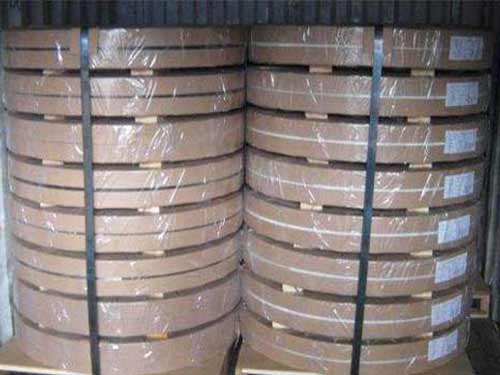
- Coil ID/OD, coil weight, and packaging method for line feeding
- Surface condition: mill finish, degreased, coated, or primer-compatible
- Inspection items: thickness mapping, mechanical property certificate, chemical composition report, surface defect criteria, burr direction/height limits
When a building envelope meets stringent energy goals and still feels comfortable to the touch, that success often comes from components nobody sees. The aluminium strip in a thermal break system is one of those components. Treated as a precision part-defined by alloy chemistry, temper discipline, surface engineering, and tight dimensional control-it becomes a quiet contributor to lower U-values, fewer condensation complaints, and longer service life.