
PVDF Aluminum Coil for Strip Panels: The "Weather Skin" That Makes Panels Last
Strip panels are often chosen for what they don't do: they don't warp, they don't crack like brittle materials, and they don't demand constant repainting. In that quiet reliability, PVDF aluminum coil plays a defining role. Think of PVDF-coated aluminum coil as the "weather skin" of a strip panel system-an engineered surface that takes the sun, salt, dust, rain, and pollutants so the building's core structure doesn't have to.
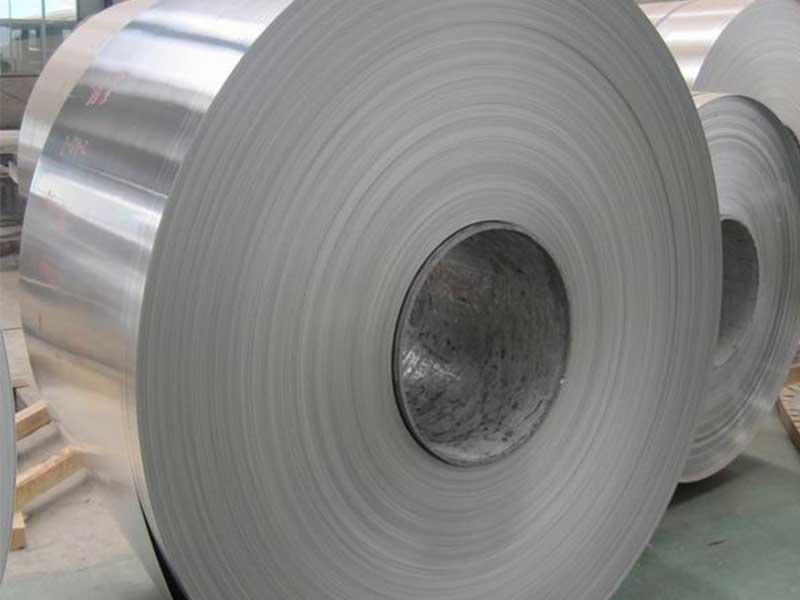
From a practical buyer's perspective, PVDF aluminum coil isn't just a colored metal. It is a controlled combination of alloy, temper, pretreatment chemistry, primer, PVDF topcoat, and curing process. When each layer is matched correctly to the strip panel design, the result is a facade or cladding surface that holds gloss, resists fading, and stays clean-looking for years in harsh outdoor exposure.
What PVDF Coating Actually Does in Strip Panel Use
PVDF (polyvinylidene fluoride) coatings are valued because the fluorocarbon resin creates exceptionally stable chemical bonds. In outdoor architecture, that stability shows up as resistance to ultraviolet degradation, chalking, color shift, and chemical attack from industrial atmosphere or coastal salts.
For strip panels, PVDF coil coating brings several functions that matter directly to fabrication and long-term appearance:
PVDF provides durable color for large surfaces where even slight fading becomes obvious. Strip panels create continuous lines across a façade; PVDF helps keep those lines visually consistent over time.
PVDF improves corrosion resistance by acting as a barrier system. While aluminum naturally forms an oxide layer, the coating system adds controlled protection, especially at cut edges and formed areas when combined with proper pretreatment and primer.
PVDF supports roll-forming, bending, and profiling when the correct temper and coating flexibility are chosen. Strip panels often require tight radii, ribs, or standing seams; coating performance must match the forming demands.
PVDF also helps the building stay presentable with less maintenance. Many PVDF systems are formulated with stain resistance and lower surface energy, helping dirt release more easily under rain wash.
A Distinctive Way to View the Product: "Coating + Temper = Formed Surface Integrity"
Many discussions focus only on coating brand or paint type. In reality, for strip panels, the most practical viewpoint is the relationship between coating flexibility and aluminum temper.
A hard temper improves flatness and strength, but can reduce formability. A softer temper forms more easily, but may be more prone to oil-canning if the panel design and gauge are not balanced. The best PVDF aluminum coil solution is the one where the alloy-temper choice supports the panel geometry, and the coating system survives the forming without micro-cracking.
Typical Parameters for PVDF Aluminum Coil Used in Strip Panels
Below are common supply ranges that fit most strip panel coil-coating and roll-forming requirements. Exact selection depends on wind load design, panel width, profiling depth, and local climate.
Base material thickness: 0.30–1.20 mm (typical strip panel cladding often uses 0.50–0.90 mm)
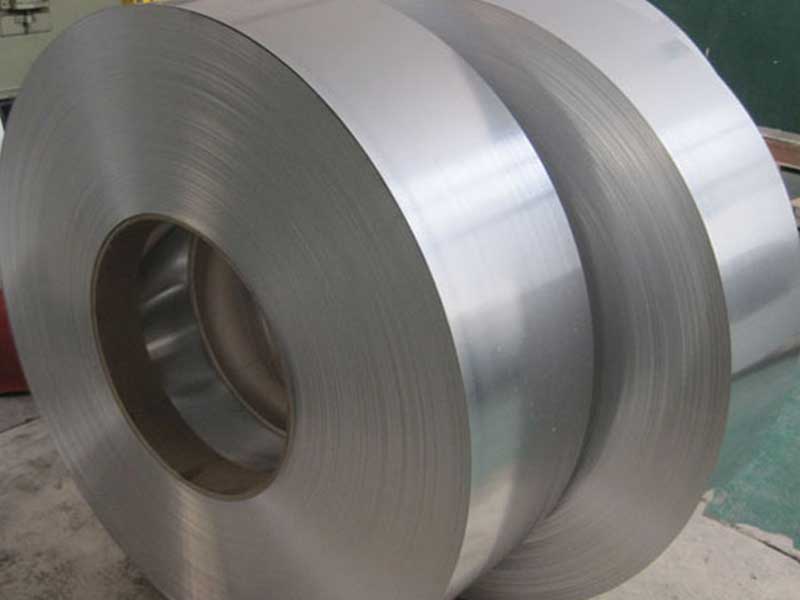
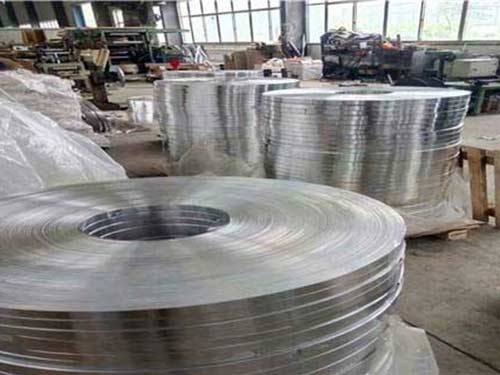
Coil width: 200–1600 mm (slitting into strip widths per panel design is common)
Coating structure: PVDF 2-coat (primer + topcoat) or 3-coat (primer + color + clear/top)
Topcoat resin: ≥70% PVDF (Kynar 500/Hylar 5000 type systems are common benchmarks)
Coating thickness: topcoat 20–28 μm, primer 5–8 μm (typical total 25–35 μm)
Back coating: service coat 5–10 μm or back primer per installation environment
Gloss levels: matte/low gloss to high gloss; often 20–35 GU (60°) for contemporary façade looks
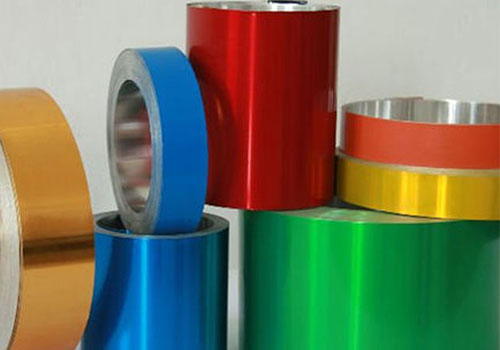
Color options: solid, metallic, mica, and selected special effects depending on paint system
Protective film: optional, usually 40–80 μm removable film for forming and handling
T-bend: commonly 0T–2T depending on alloy/temper and coating formulation
Pencil hardness: typically HB–F range depending on system (balanced against flexibility)
Alloy and Temper Choices That Work in Real Strip Panel Manufacturing
In PVDF-coated aluminum strip for panels, the most used alloys are from the 3xxx and 5xxx series.
3003 / 3005 / 3105 are widely used for architectural cladding because they balance formability, corrosion resistance, and cost. 3005 and 3105 are especially common for painted aluminum applications and roll-formed profiles.
5052 offers higher strength and excellent corrosion resistance, useful where higher mechanical performance is needed, but it can cost more and requires careful forming setup.
Common tempers for strip panels include:
H24 / H26 for a balance of strength and formability in roll forming.
H14 / H16 when easier bending is needed.
H18 when higher rigidity and flatness are prioritized and forming is not severe.
Choosing temper is not merely a strength decision; it is a surface decision. The wrong temper can amplify visual waviness or create coating stress at bends.
Implementation Standards and What They Signal to Buyers
Buyers often see standards as paperwork, but for PVDF aluminum coil, standards reveal how the coating will perform in the field. Typical references include:
ASTM B209 for aluminum coil/strip dimensional and material requirements.
EN 485 series for European aluminum sheet/strip tolerances and mechanical properties.
AAMA 2605 for high-performance organic coatings on aluminum (widely used benchmark for PVDF architectural coating).
ISO 2813 for gloss measurement and ISO 2409 for cross-cut adhesion (commonly used quality checks).
ASTM D3359 for adhesion, ASTM D2244 for color difference, and ASTM G154/G155 for accelerated weathering references (project-dependent).
If a PVDF coil coating is aligned with AAMA 2605-level expectations, it typically means the system is designed for long-term exterior exposure with strict limits on color fade and chalking.
Where PVDF Aluminum Coil Shines in Strip Panel Applications
PVDF coil is particularly well suited to strip panels used in:
Building façades and curtain wall accents where color stability is critical
Rainscreen cladding systems that face wind-driven rain and temperature cycling
Canopies, soffits, and fascia where glare control and cleanability matter
Airport, station, and commercial complexes exposed to pollution and frequent cleaning
Coastal architecture where salt and humidity accelerate corrosion challenges
Industrial parks requiring chemical resistance to mild acids/alkalis in the atmosphere
Because strip panels are often long and visually continuous, PVDF's ability to maintain consistent appearance across years of exposure becomes a functional advantage, not just an aesthetic one.
Chemical Composition Table (Typical Alloy Reference)
Chemical ranges vary by standard and supplier; the table below reflects commonly referenced typical limits for architectural coil alloys.
| Alloy | Si (%) | Fe (%) | Cu (%) | Mn (%) | Mg (%) | Zn (%) | Cr (%) | Ti (%) | Al |
|---|---|---|---|---|---|---|---|---|---|
| 3003 | ≤0.60 | ≤0.70 | 0.05–0.20 | 1.0–1.5 | - | ≤0.10 | - | - | Balance |
| 3005 | ≤0.60 | ≤0.70 | ≤0.30 | 1.0–1.5 | 0.20–0.60 | ≤0.25 | ≤0.10 | ≤0.10 | Balance |
| 3105 | ≤0.60 | ≤0.70 | ≤0.30 | 0.30–0.80 | 0.20–0.80 | ≤0.40 | ≤0.20 | ≤0.10 | Balance |
| 5052 | ≤0.25 | ≤0.40 | ≤0.10 | ≤0.10 | 2.2–2.8 | ≤0.10 | 0.15–0.35 | ≤0.10 | Balance |
If your strip panels will be used in coastal zones or areas with aggressive cleaning schedules, 5xxx alloys can provide extra corrosion robustness, while 3xxx alloys remain the cost-effective workhorse for most architectural envelopes.
Practical Spec Notes That Reduce Risk
A PVDF aluminum coil performs best when the entire system is specified, not just "PVDF paint." Confirm pretreatment type (often chrome-free conversion coatings are used), coating thickness targets, acceptable color tolerances, and forming requirements such as minimum bend radius or T-bend performance.
For strip panels, it's also important to match the back coat to the installation environment. A simple back service coat may be enough for ventilated façades, while more demanding assemblies benefit from a stronger back coating or back primer.
The Takeaway
PVDF aluminum coil for strip panels is best understood as a long-term surface engineering solution: alloy and temper provide the mechanical backbone, while the PVDF coating system provides the climatic shield. When those elements are aligned with proven standards and the real forming behavior of strip panels, you get a clean, stable façade material that stays architecturally sharp long after installation.