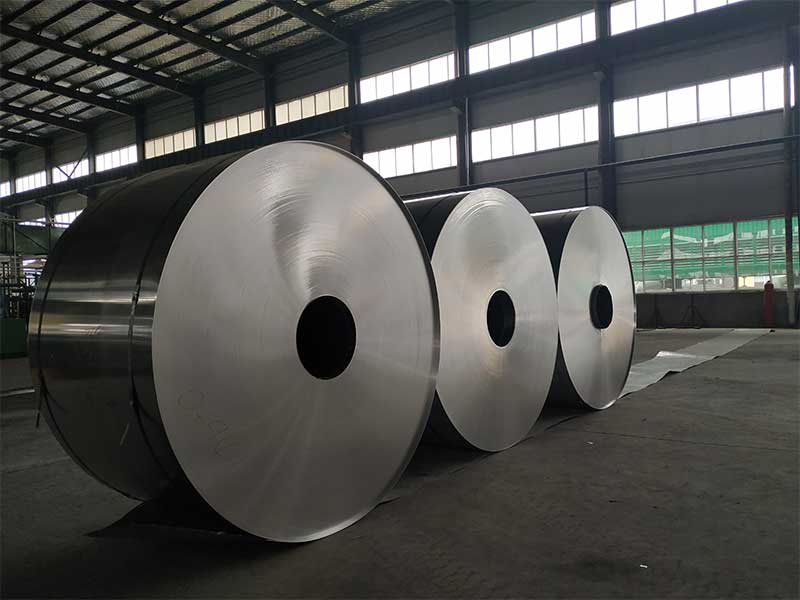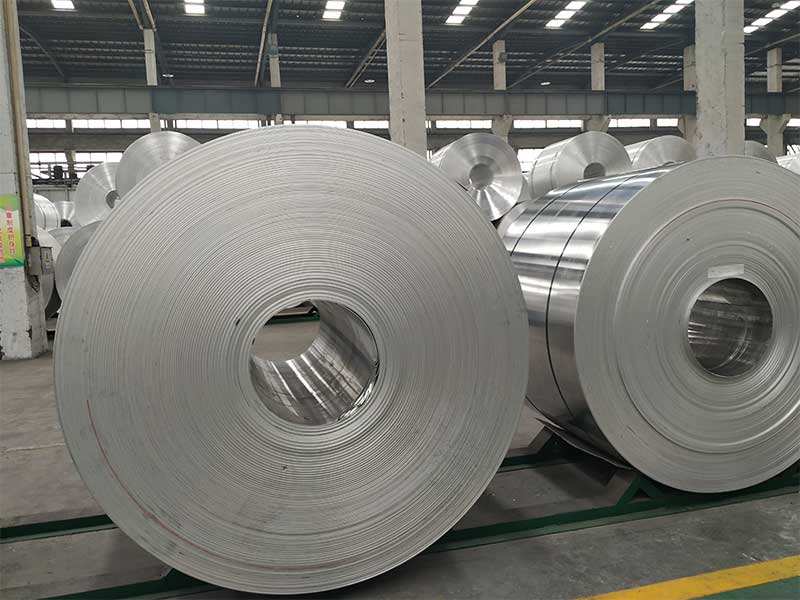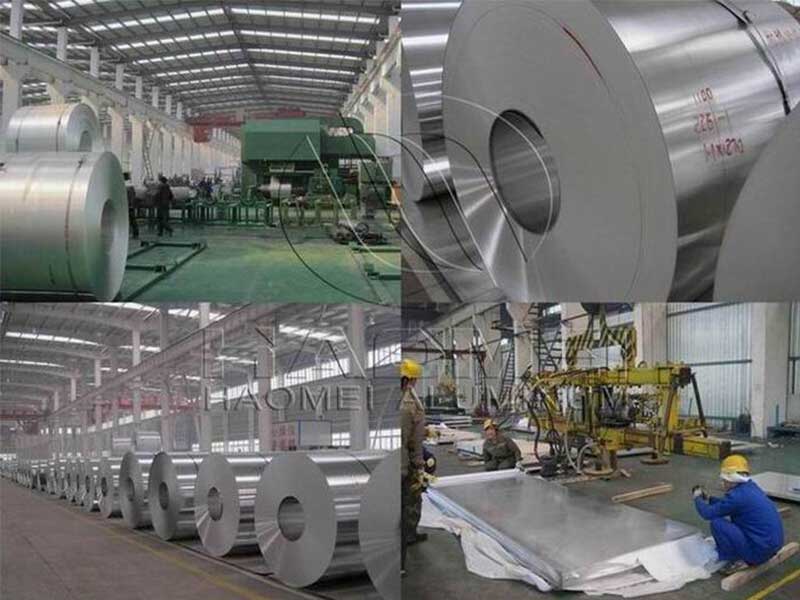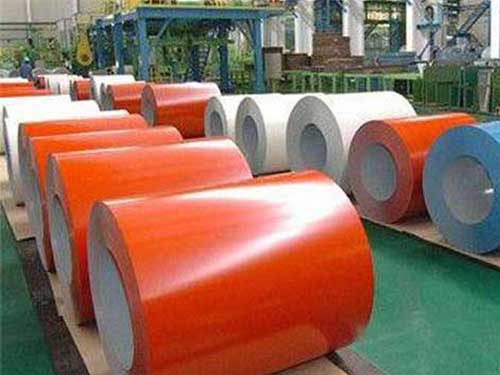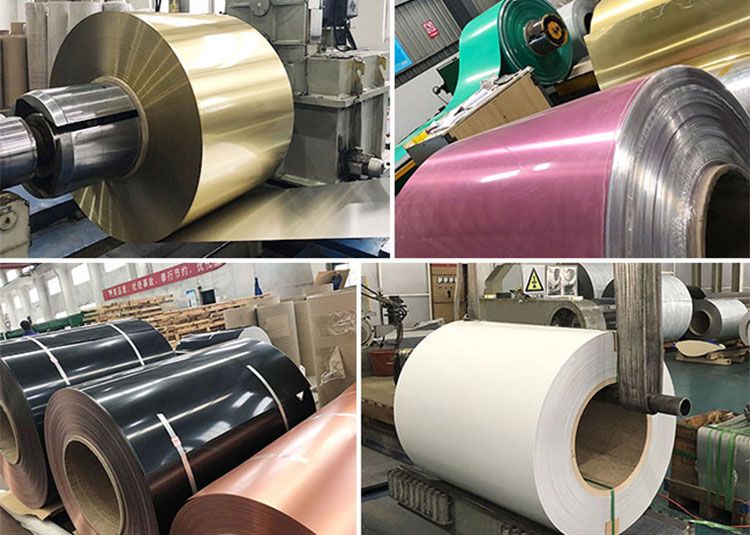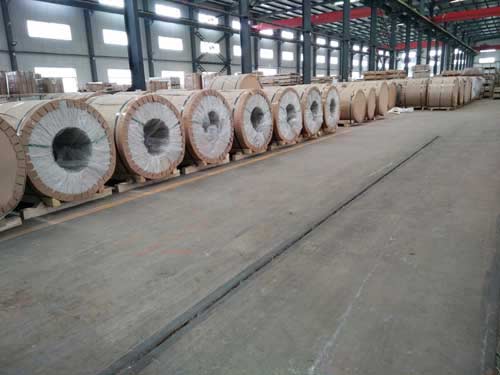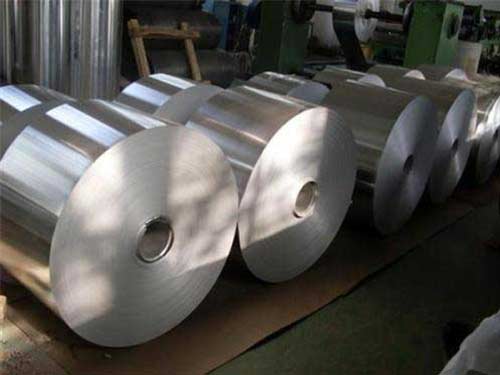

Prepainting aluminum coil is often described as "aluminum with a coat of paint." That definition is convenient, but it misses what the product truly is: a controlled, coil-scale chemical-and-mechanical system designed to make color behave like a durable functional layer rather than a decorative afterthought. From the perspective of alloy metallurgy and surface chemistry, prepainted aluminum coil is a three-part performance structure-substrate, conversion chemistry, and coating film-each one tuned to the others so the final sheet can be formed, cut, embossed, or roll-formed without sacrificing corrosion resistance, adhesion, or color stability.
Seeing Prepainted Aluminum Coil as a "Process Memory" Material
Aluminum coil remembers what happened to it.
If the coil was over-worked, the temper will show it in bending behavior. If the surface pretreatment was insufficient, the coating will reveal it later as filiform corrosion or edge creep. If curing was uneven, gloss and hardness drift across the width. A high-quality prepainting aluminum coil is essentially a product where every step leaves a useful "memory" that supports the next: cleaning enables conversion coating, conversion enables primer bonding, primer enables topcoat durability, and curing stabilizes the whole film stack.
That is why prepainted coil is valued in architectural cladding, roofing, fascia, shutters, ceiling systems, appliance panels, and transportation interiors: it brings the repeatability of factory-controlled chemistry to end-use environments that are not controlled at all.
What "Prepainting" Actually Means in Coil-Coating Terms
Prepainting aluminum coil typically refers to continuous coil coating where aluminum strip runs through:
Surface cleaning and degreasing
Rinse stages and surface conditioning
Conversion coating or pretreatment
Primer coating and cure
Topcoat coating and cure
Cooling, protective film (optional), and recoiling
The coating system may be one-coat (direct-to-metal) for economical indoor applications, but more commonly a two-coat, two-bake configuration is used for durable exterior service.
Parameters That Define Prepainted Aluminum Coil Quality
Quality is measurable. When specifying prepainted aluminum coil, these parameters determine whether the coil behaves as intended in forming, service life, and appearance consistency.
Base metal thickness (aluminum substrate)
Common range: 0.20 mm to 3.00 mm (application dependent)
Coil width
Common range: 20 mm to 1600 mm (varies by mill and coating line)
Coating thickness (dry film thickness, DFT)
Primer: typically 5–8 μm
Topcoat: typically 15–25 μm for PE, 20–30 μm for PVDF (system dependent)
Back coat: typically 5–12 μm depending on exposure and need
Gloss and color control
Gloss targets often specified at 60° (ASTM D523) with tolerance windows
Color tolerance typically controlled by ΔE under agreed lighting/observer conditions
Adhesion and formability metrics
Cross-hatch adhesion (ASTM D3359)
T-bend (common coil-coating formability indicator; lower T is better)
Impact resistance (ASTM D2794)
Pencil hardness (ASTM D3363) as a comparative screening tool
Corrosion testing indicators
Salt spray (ASTM B117) and humidity resistance tests for comparative performance
Edge creep evaluation where cut-edge durability matters
Filiform corrosion resistance especially for architectural and coastal climates
Implementation Standards and Reference Specifications Used in Prepainted Aluminum Coil
Prepainted aluminum coil sits at the intersection of aluminum metallurgy standards and coil-coating performance standards. Commonly referenced frameworks include:
Aluminum coil substrate standards
ASTM B209 for aluminum and aluminum-alloy sheet and plate
EN 485 series for aluminum and aluminum alloys sheet/strip properties (Europe)
Coil coating and paint performance references
ASTM D3359 for adhesion
ASTM D2794 for impact resistance
ASTM D523 for gloss measurement
ASTM B117 for salt spray exposure
ISO 2813 for gloss (international)
ISO 2409 for cross-cut adhesion (international)
Architectural coating references often used in specifications
AAMA 2603, AAMA 2604, AAMA 2605 are commonly cited benchmarks for organic coating performance on architectural aluminum, especially when PVDF is involved. These AAMA standards are widely used as "performance language" in projects that demand predictable weathering and color retention.
In practice, the exact standard set depends on region and project type, but a robust specification will always connect paint system, pretreatment type, and alloy/temper to measurable test outcomes.
Alloy Selection: The Substrate is Not Just a Carrier for Paint
Different aluminum alloys interact differently with forming stress, conversion coating chemistry, and the long-term stability of the paint system. The "best" alloy depends on whether you value deep forming, stiffness, corrosion resistance, or yield strength.
Common alloys for prepainted aluminum coil include:
AA 1100 (commercially pure aluminum)
Excellent formability, good corrosion resistance, often used where extreme strength is not required.
AA 3003 (Al-Mn)
A workhorse alloy for roofing, cladding, and general sheet applications; good balance of formability and strength.
AA 3005 / AA 3105 (Al-Mn-Mg)
Often used in building products and painted applications; higher strength than 3003 with solid forming behavior.
AA 5052 (Al-Mg)
Higher strength, good corrosion resistance; used where tougher mechanical performance is needed, though forming windows and coating practice must be controlled carefully.
Tempering: The Hidden Dial that Controls Formability and Springback
Temper is where prepainted coil becomes less about "paint" and more about engineering.
Typical tempers for prepainted aluminum coil include:
H14 / H24
Common for building panels and roll-formed profiles where moderate strength and formability are both required.
H16 / H18
Higher hardness and strength; better dent resistance but reduced bendability. Useful for certain panels where stiffness dominates.
O (annealed)
Maximum formability; often selected when deep drawing or aggressive shaping is required, though dent resistance is lower.
Temper affects T-bend performance, cracking risk at bends, and springback during roll forming. Matching temper to the forming method is one of the most effective ways to reduce coating micro-cracks that later become corrosion initiation points.
Pretreatment: Where Aluminum Chemistry Meets Paint Adhesion
Pretreatment is the "bridge layer" between a reactive metal surface and a polymer coating. In coil coating, conversion coatings commonly include:
Chromate conversion coatings (legacy, high performance, regulated)
Chromium-free conversion coatings (widely adopted)
Zirconium or titanium-based pretreatments (common in modern lines)
The purpose is not only corrosion resistance but also anchoring: creating a chemically compatible surface that allows primers to bond uniformly, reducing delamination and filiform corrosion.
Coating Systems: Selecting Resin Like You Select an Alloy
Paint is a formulated composite of resin, pigments, additives, and solvents (or water). The resin family largely determines weathering performance.
Polyester (PE)
Cost-effective, wide color range, common for general building products and interior/exterior moderate exposure.
Silicone-modified polyester (SMP)
Improved weatherability and chalk resistance compared to standard PE; often used for metal roofing and exterior panels.
PVDF (often 70% PVDF resin systems)
High-end architectural performance, superior color retention and UV stability, widely specified for facade and curtain wall applications.
PU and epoxy primers
Used to tune adhesion, flexibility, and corrosion resistance depending on topcoat selection and environment.
A useful way to view resin selection is as "UV management." PVDF manages UV by resisting chain scission and chalking, while PE systems rely more on stabilizers and can show earlier gloss loss in harsh environments.
Naturally Integrated Technical Specification Snapshot (Typical, Customizable)
Prepainted aluminum coil can be supplied with project-specific ranges. A typical supply capability profile looks like:
Substrate thickness from 0.20 mm up to 3.00 mm depending on end use
Coil width available up to typical coating-line limits, frequently up to 1600 mm
Aluminum alloys commonly AA1100, AA3003, AA3005, AA3105, AA5052
Tempers commonly O, H14, H24, with harder tempers available for stiffness-oriented panels
Coating options PE, SMP, PVDF with primer + topcoat architectures
Surface finish options including matte, semi-gloss, high gloss, textured, and patterned coatings
Protective film available for scratch-sensitive fabrication routes
Chemical Properties Table: What Aluminum Brings to the Coating System
The aluminum substrate's chemical and electrochemical behavior influences pretreatment choice, edge performance, and corrosion modes. The table below provides commonly referenced baseline properties of aluminum relevant to prepainted aluminum coil engineering. Values can vary with alloy and condition, but these are widely used reference figures.
| Property | Typical Value / Description | Why It Matters for Prepainted Aluminum Coil |
|---|---|---|
| Chemical symbol | Al | Defines base metal chemistry |
| Atomic number | 13 | Relevant for oxide formation behavior |
| Atomic weight | 26.98 g/mol | Used in conversion chemistry calculations |
| Density | ~2.70 g/cm³ | Lightweight panels and reduced load in construction |
| Melting point | ~660 °C | Sets thermal boundaries for processing (paint cure is far below this) |
| Thermal conductivity | ~205 W/m·K | Helps dissipate heat during baking; affects curing uniformity |
| Electrical resistivity | ~2.65×10⁻⁸ Ω·m | Less central for coatings, important for some appliance and electrical housings |
| Coefficient of thermal expansion | ~23×10⁻⁶ /K | Impacts stress between coating and metal during temperature cycling |
| Natural oxide film | Al₂O₃ forms instantly | The reason pretreatment is required for durable adhesion |
| Standard electrode potential (Al³⁺/Al) | ~ −1.66 V | Indicates strong tendency to oxidize; coatings must block electrolytes and protect edges |
| Corrosion behavior | Passivates in many environments | Coatings preserve passivation and prevent localized attack at defects |
If you want a project-specific chemical composition table by alloy, it can be added for AA3003, AA3105, AA5052, or other grades, including Mn, Mg, Fe, Si, Cu limits per ASTM/EN references.
Performance from a Distinctive View: The Cut Edge is the Truth Teller
Flat-surface weathering gets most of the attention, but the most honest test of a prepainted aluminum coil system is the cut edge. When a coated sheet is slit, punched, or sheared, the edge becomes a pathway where moisture and ions can interact with both coating stack and alloy chemistry.
If pretreatment is strong and primer bonding is uniform, the coating resists underfilm migration. If the alloy/temper choice matches the forming operation, micro-cracking at bends stays minimal, and the edge remains stable. This is why specifying prepainted aluminum coil is never just choosing a color; it is selecting a system that keeps its integrity where it is most vulnerable.
Where Prepainted Aluminum Coil Excels
Architectural cladding and curtain wall elements that demand color retention and consistent gloss
Metal roofing and rainwater systems where long-term outdoor exposure is constant
Ceiling and interior decorative systems that require uniformity and cleanability
Appliances and enclosures needing smooth appearance, stamping performance, and reliable adhesion
Transportation interior panels where weight reduction and durable finishes both matter
Choosing Prepainted Aluminum Coil with Confidence
A strong specification connects alloy, temper, pretreatment, coating system, and test method into one coherent performance promise. When these elements are aligned, prepainting aluminum coil becomes more than a surface treatment-it becomes a manufactured stability: stable color, stable adhesion, stable forming behavior, and stable corrosion resistance in real-world service.